hotspot

Construction activity shifts across the UK

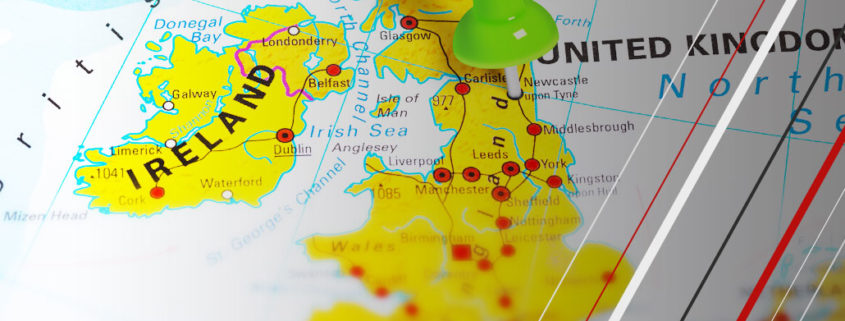
According to a report by industry analysts Barbour ABI and the Construction Products Association, construction hotspots and coldspots have been identified by regional activity and a forward looking indication of growth by region and sector. These hot spots and cold spots seek to identify regions where contract awards in 2016 were significantly above or below previous years, which highlights pockets of activity of contraction in construction over the near term horizon.

The report states that there are clear hotspots for upcoming construction activity over the next 6-12 months in Great Britain. There is only one broad hotspot in this year’s report – Birmingham – where contract awards in each of the three main construction sectors of residential, commercial and infrastructure restricted to a single construction sector, but spread across the regions of Great Britain.

Analysis has been expanded in the 2017 edition of Regional Construction Hotspots to cover coldspots. Coldspots are clustered in the residential sector, with this weakness replicated across the country as contract awards values fell from the highs registered in 2015 and below long-term averages . In the South East and Yorkshire & Humber and the East Midlands, one-third of sub-regions were residential coldspots. London was the sole region where there were no residential coldspots, with contract awards for large developments keeping values relatively unchanged from 2014 and 2015.

In past years, London dominated the ‘hotspot’ pockets of construction activity, however the report for 2016 indicates a spread across Great Britain, with London only holding six of the 61 hotspots. Scotland was the leading region with nine hotspots after doubling its contracts awarded value for infrastructure to £3.8 billion.

The South East region accounts for 15.0% of total UK GVA (Construction gross value added) Key sectors of economic activity in the region are distribution and transport, information and communications, real estate activities, business services and public administration. Construction accounted for 6.3% of regional GVA in 2015 and declined 1.5% in that year. The value of contract awarded in the region totalled £8.6 billion in 2016, a decrease of 15.8% from the previous year. In terms of overall contract awards, hotspots were in East Kent, Mid Kent, Milton Keynes and North Hampshire.

Commenting on the figures, Michael Dall, Lead Economist at Barbour ABI, said: “The Government is focused on raising the levels of major infrastructure projects, in particular public sector schemes such as offshore wind farms, energy plants and motorway upgrades have considerably boosted construction value in more rural regions”.

A copy of the report can be seen here

construction inspection

A sharp decline in construction inspections isn’t good news

According to Unite, the UKs principal construction union, there has been a large drop in the number of construction inspections carried out. Unite is seeking urgent meetings with the Health and Safety Executive (HSE) after asking for a freedom of information act. (FOI)

The FOI response from the HSE revealed that the number of unannounced inspections occurring in the construction industry fell by 14 per cent in just 12 months. In 2015/16 there were 9,219 inspections and this reduced to 7,912 in 2016/17. The reduction in inspections follows a trend as there was also a 4 per cent decrease in the previous 12 months.

Unite continue by explaining that construction is the most dangerous industry in the UK. Several academic studies have revealed a clear correlation between the frequency of inspections and compliance with safety laws.

Since receiving the FOI response Unite has written to the HSE and David Gauke the new work and pensions secretary, seeking meetings. Unite are seeking information from Mr Gauke about the government’s future plans for the HSE and safety laws. The HSE’s funding is set to be cut by 46 per cent, compared to what the organisation received in 2010, by 2020. Successive Conservative governments have scrapped safety laws and there are concerns this could increase as part of the Brexit process.

Unite are seeking a meeting with the HSE to ascertain exactly what caused the latest decrease in construction inspections and what strategies are being put in place to reverse the trend.

The regional breakdown also revealed marked differences in inspection activity with just one region recording an increase in the past 12 months. The figures were as follows, Eastern -22 per cent, East Midlands -26 per cent, London -14 per cent, North East -39 per cent, North West -5 per cent, Scotland +9 per cent, South East -8 per cent, South West -32 per cent, Wales -15 per cent, West Midlands -13 per cent, Yorkshire -4 per cent.

Unite assistant general secretary Gail Cartmail, said: “These figures are alarming as they demonstrate a huge decrease in vital lifesaving inspections. Sadly there remain far too many employers who are all too willing to cut safety regulations and it is only the genuine prospect of an unannounced inspection which keeps them in check.

Accidents on building sites are not that rare of an occurrence, and sometimes this simply could be because of human error. Inspections give piece of mind to both workers and contractors, and the more inspections there are the safer our building sites. Health and safety are of paramount importance, and cutting corners will only lead to more accidents and ultimately deaths.

We look forward to finding out what Unite manage to glean from the HSA.

smart building

What is a smart building?

Fundamentally, Smart buildings strive to maintain the lowest costs whilst being the most productive and having the lowest environmental impact. Important building operations in smart builds include ventilation, heating, air conditioning, lighting and security. The building uses sensors to collect data and manage it accordingly, therefore reducing energy use and optimising the space.

Navigant research estimates that the smart building technology market will generate global revenue of $8.5 billion in 2020, up from $4.7 billion in 2016, growing at a compound annual growth rate of 15.9% over the forecast period.

Smart building technology is expected to grow by 34 percent annually over the next five years, with a prediction of reaching a total market value of nearly $25 billion by the year 2021.

Energy savings and sustainability are the main benefits. Reducing energy costs, increasing productivity of staff and improving building operations are also important.

If a building is not performing to its design standard, this means a smart building should be able to gather information as to why, and adapt accordingly. Interconnected technologies make the building more responsive and ultimately improve its performance.

The fundamentals on construction have not changed significantly for many years. Concrete, timber, glass and brick are still the materials of choice for most contractors. Construction is continually criticised for not being innovative or inventive enough, and advances in other industries have outstripped it. These relatively new technologies could bring about real change.

However, there is a downside. Soon smart buildings and structures will become so automated, they’ll be able to diagnose and make structural and system repairs on their own without the need for humans.

There are always risks with new technology. The advantages are obvious, but there could be additional risks related to cost, delays and materials. The smart building gold standard is moving faster than conventional construction, and the ability to keep up remains to be seen. Its an exciting period on construction, and one that is becoming ever more important in the society that we live in. Going green as much as possible and reducing the carbon footprint as we discussed last month are construction buzz words that investors and designers are interested in.

For further information on smart buildings, The Crystal in London is a great example.


2017 UK Construction Week is launched

Billed as the largest gathering of the UK’s built environment community, UK Construction Week will make its return to Birmingham NEC from the 10th – 12th October 2017. It is free to attend for trade visitors and consists of 9 shows: Build Show, Timber Expo, Civils Expo, Plant & Machinery Live, Energy 2017, Smart Buildings 2017, Surface & Materials Show (featuring Kitchens & Bathrooms Live), HVAC 2017 and Grand Designs Live.

The main stage speakers and seminars include welcomes and introductions from George Clark (Restoration Man), Steph McGovern (BBC Breakfast Business Presenter) and Tom Dyckhoff (broadcaster and historian on architecture, design and cities)

Offsite Construction will be a major theme this year. The industry has embraced the latest technologies that have enabled us to build quicker, more efficiently and at a quality not achievable before. One of the main aims of the event is to showcase innovation in the industry, and to that end the Innovation Trail will show visitors the latest products which are paving a new way of building that hasn’t been seen before.

There will also be some new, specialist awards granted which include Low Carbon Vehicles Awards, BIM Awards, Offsite Awards and the WAN Transport, Concrete in Architecture and Adaptive Reuse Awards. The UK’s best companies in the industry will also be recognised at the Construction Enquirer Awards on the opening night of the show.

Evening entertainment will include a casino night, dodgeball tournament and the popular Beer and Ale festival. The Beer Festival was a big hit with exhibitors and clients in 2016. With over 30 beers on offer and a selection of hot food available, live music and entertainment this area will be the perfect way to unwind after a busy day and a chance to network with clients and colleagues. The Beer festival will be at full capacity both nights and open all day and promises to be the centre of festivities at UK Construction Week.

Nathan Garnett, event director at Media 10, which runs the show, said: “The UK’s construction industry is more topical than ever. Not only is it at the forefront of political debate and public opinion, it’s also clear that we’re moving towards a new age of innovation and change with topics such as off-site construction, modular and BIM driving so many conversations. This will be our biggest event to date, and we’re looking forward to bringing the industry together to debate, learn and do business, as well as showcase a diverse range of products and services.” UK Construction Week 2017 says it will deliver its ‘most comprehensive and diverse’ show to date with support from associations including The Chartered Institute of Building (CIOB), Royal Institute of British Architects (RIBA), Construction Products Association (CPA) and Builders Merchants Federation (BMF).

For more information please visit the UK construction week website here.

solent barbarians

Broadsword and the local community – Solent Barbarians

We are pleased to be the main, front of shirt sponsors for the Solent Barbarians this year and we are loving their new kit!

The Solent Barbarians offers players from local clubs the opportunity to unite and demonstrate the ethos of Rugby Union.

We continue to be committed to the development of local sporting teams from grass roots to a semi professional level. We have in the past sponsored Southampton cricket club, Women’s waterside hockey team, Fawley Falcons, Hythe & Dibden FC and Brockenhurst FC.

If you would like to follow the Solent Barbarians this season please go to their twitter page at https://twitter.com/Solent_Babas

We hope you have a great season!

kit

carbon

How can the construction industry reduce its carbon footprint?

With the threat of global warming constantly looming, reducing the carbon footprint within the construction industry has become a point of upmost importance.

Eco friendly buildings are on the rise in the UK, and pressure is mounting to build in a more environmentally friendly way – so are we reaching our goal? The number of eco friendly construction companies is growing, and those who haven’t started using these methods may fall behind the times.

One of the main ways to become more environmentally friends is by using better insulation. The best ones, made from recycled material, reduce energy waste and have a low environmental impact. Buildings need to ensure that their hot water, heating, lighting and cooling systems all meet energy efficient measures. Windows, doors, vents and roof lights also need to be draught proofed.

Sustainable materials are also crucial. Cement production is responsible for around half of the industry’s CO2 output because of the energy required to make it, and the chemical reactions that are involved. Choosing an alternative cement that has different chemicals or use different methods such as wood, straw bales and compressed soil, have a much lower carbon footprint than cement.

The old adage of reduce, reuse, recycle is an important message with regards to reducing waste. Making sure that materials are not over ordered and recycling where ever possible is key. Sourcing materials locally is also a plus, because it means that there is less need for transporting them, and using materials that can be packed more efficiently and weigh less mean that energy is saved.

Optimising natural light and using solar power can be a great energy saver. Lighting can account for up to 40% of the energy used in a typical commercial building so making savings here seems obvious.

Water usage can also make savings. Efficient fixtures and appliances can reduce water usage. Reduced flush toilets and rain water harvesting are becoming more popular as people seek to reduce their costs as much as possible.

Passive houses are also becoming more prominent. Passive house is a rigorous, voluntary standard for energy efficiency in a building, reducing its ecological footprint. It results in ultra-low energy buildings that require little energy for space heating or cooling. Passive House is not a brand name, but a construction concept that can be applied by anyone and that has stood the test of practice.

Carbon reduction is a complex challenge, and companies that can demonstrate green credentials are at the top of the construction sector in the UK. Managing and reducing the carbon footprint is becoming increasingly important in such a fast paced industry as ours.

vacancy

VACANCY: Graduate Construction Estimator

We are looking for a diligent Graduate Construction Estimator to prepare accurate estimates for projects by gathering information and analysing important metrics.

Responsibilities and duties include but not limited to:

  • Maintaining estimating database
  • Maintaining terms comparison database
  • Producing drawing quantity take offs, compiling and completing BoQ’s
  • Compiling tender information for client submission
  • Liaising with clients and negotiating tender settlements
  • Attending pre let/tender review/handover meetings

About You:

The ideal candidate will have excellent numerical skills and an analytical mindset. You must also be thorough and apt in managing relationships with key persons.


For further information and to apply for this role, please go to https://graduatejobs.solent.ac.uk/job/42244/construction-estimator/

Please note the closing date is July 26th.

house in 5 days

Would you like your home built in 5 days?!

H+H, the UKs largest manufacturer of aircrete blocks and systems, have collaborated with SIG Offsite to create a house that can be built in 5 days!

According to their website, the house provides all the speed of offsite construction with the familiarity of a traditional build, from foundations to roof. The system can encompass the inner leaves of external cavity walls, floors, lintel, cavity closers, insulation and roof trusses. With the inclusion of soffit and fascia, the system delivers the internal skin of a property, fully wrapped and ready for follow-on trades.
Created at a time when there is a demand to increase the volume of house building and when skilled workers are in short supply, the system is a one stop shop for clients – with a single contractor required to deliver the whole house shell.

The system is intended for the construction of domestic houses of up to two storey height, replacing the structure of the inner leaf of external cavity walls, separating walls and internal partitions with storey height Celcon Elements. Installed by the SIG Offsite team, Celcon Elements are craned into place and fixed using H+H element mortar.  Timber I-Joist cassette floors are used in conjunction with the system to maintain the speed of build and roofs are either standard truss construction or the ‘Roofspace I-Roof’ – panelised roof system.  All components are raised into position by crane. Celcon Elements are manufactured from the same intrinsic material as aircrete blocks and have the same performance advantages including excellent thermal performance with reduced heat loss at thermal bridges.

The innovation has recently won the Best Building Fabric Product in the Housebuilder Product Awards 2017 after previously winning a Barratt Developments’ Supplier Excellence Award. An entrance into the Product of the Year category in the Housebuilder Awards 2017 will now come in November.

Well done to H+H and SIG Offsite for the SIG I House System!

FIRAS

Broadsword FIRAS accreditation complete

We are very proud to announce that we have now been awarded our FIRAS accreditation! We are always looking for ways to enhance the services that we give to our clients, and having this means that we can offer something new.

It has been hard work to complete, and we will still have to undertake rigorous random inspections. We can now enter the FIRAS Register of Certificated Installer Companies!

Firas

FIRAS is a third party certification scheme that verifies the competence of a contractor company to design fire protection systems. As a participant in the scheme the company has to employ appropriately skilled design, supervision and operational staff who have been assessed. FIRAS companies may issue a FIRAS endorsed certificate conformity verifying completion of works where upon an installation certificate may be issued.

Many customers know little about how fire threatens their staff or business or what their legal obligations are. Once Broadsword become certificated we can prove our competence and therefore differentiate from the competition. This means that we can generate new customers and business to companies who see fire risk as an important element of their construction.

FIRAS certified contractors are required to undergo a 3 stage assessment process. Once all the criteria are satisfied certification will be granted.

The 3 stages are as follows:

  • Assessment of office management systems
  • Assessment of workmanship of the site for all trade disciplines for which certification is sought.
  • Competence assessment of supervisory and installation employees.


Brexit – what does it mean for the construction industry?

The latest figures from the Royal Institution of Chartered Surveyors (RICS) show that eight per cent of the UK’s construction workers are EU nationals, accounting for some 176,500 people. Post Brexit, if the UK looses access to the single market, 176,500 jobs could be under threat which could jeopardise a predicted £500 billion infrastructure pipeline to a standstill. This must be addressed as a priority, according to RICS.

Jeremy Blackburn, head of UK Policy at RICS says that “as the industry’s professional body, we are working with government and industry to develop that skills base, building vital initiatives – such as degree apprenticeships – in our sector to drive the talent pipeline forward.”

The UK is already in the grip of a construction skills crisis. While some overseas professionals are regarded as critical by the UK Government, and are therefore prioritised during the visa application process, construction professions have not yet been added to the ‘UK Shortage Occupations List’. According to Blackburn, quantity surveyors should be included on that list. Some of the professions that are on the list won’t improve our infrastructure or solve the housing crisis, yet their skills are currently viewed as essential, whereas construction professionals are not.

RICS has cautioned that for Brexit to succeed, it is essential to secure continued access to the EU Single Market or to put alternative plans in place to safeguard the future of the property and construction sectors in the UK. Blackburn states that unless access to the single market is secured or alternative plans are put in place, we won’t be able to create the infrastructure needed to enable our cities to compete on a global stage. We have said before that this is a potential stumbling block for the Government, which is working to deliver both its Housing White Paper and Industrial Strategy. Of course, we must also address the need to deliver a construction and property industry that is resilient to future change and can withstand the impact of any future political or economic shocks — key to that will be growing the domestic skills base. As the industry’s professional body, we are working with Government and industry to develop that skills base, building vital initiatives, such as degree apprenticeships, in our sector to drive the talent pipeline forward. This survey reveals that more work needs to be done to promote the indisputable benefits of these schemes to industry — RICS intends to take this forward as a priority.

With Theresa May having officially triggered Article 50 on March 29th, Britain should officially leave the EU no later than April 2019. Last month, planning consultancy Arcadis said that the UK must hire more than 400,000 workers every year for the next five years to meet demand for house building and infrastructure projects, without the threat of foreign workers departing as a result of Brexit.

No member state has ever withdrawn from the EU, so these projections are just that at this stage. Whatever the future holds for construction, Broadsword will continue to use innovative and new approaches to deliver high quality work in all aspects of our business.