• Link to X
  • Link to LinkedIn
  • Link to Facebook
  • ABOUT US
  • WORK FOR US
  • HSEQ
  • NEWS
Tel: 02380 675888 | Email: hello@broadsword-group.co.uk
Broadsword Group
  • PROJECTS
  • RESIDENTIAL
  • SCREEDING
  • INTERIOR FIT OUT
  • FIRE PROTECTION
  • OTHER SERVICES
    • DRY LINING
    • SUSPENDED CEILINGS
    • SOLID PARTITIONING
    • RENDERING
    • SECONDARY FRAMING SYSTEM
    • ACOUSTIC SOLUTIONS
    • GLAZED PARTITIONING
    • PLASTERING
    • FIRESTOPPING AND AIR SEALING
    • SECOND FIX CARPENTRY
    • ALL FLOOR COVERINGS
    • RAISED ACCESS FLOORING
  • CASE STUDIES
    • BOW SQUARE
    • OAKLEY HALL
    • PORTSEBURY SEN SCHOOL
    • THE BROOK CLUB
    • SPLASHPOINT LEISURE CENTRE
    • FOREST EDUCATION CENTRE
    • SANDPIPER WALK
    • BISHOPS OTTER CAMPUS
    • HINCHLEY WOOD SCHOOL
    • CEMAST
    • SCHOLARS GRANGE
    • SILVER SANDS COURT
    • BROADSWORD HEAD OFFICE
    • CONFIDENTIAL DATA CENTRE
    • BULMERSHE SCHOOL
  • GET IN TOUCH
  • Menu Menu

Tag Archive for: Residential

Sustainable Building

Why the Most Sustainable Building May Be the One Already Standing

September 11, 2026/in Commercial, Home Page news feed, News, Other, Residential

The construction industry is under growing pressure to reduce waste, lower carbon emissions and make better use of existing resources. For developers, contractors and project teams, this is changing the way buildings are assessed before major works begin.

In the past, demolition and rebuild may have seemed like the obvious route when a building no longer met modern requirements. Today, the question is more complex. Could the structure be reused? Could the interior be adapted? Could performance be improved without starting again?

In many cases, the most sustainable building may be the one already standing.

Why Existing Buildings Have Hidden Environmental Value

Every building contains a large amount of material, energy and labour. Steel, concrete, blockwork, plasterboard, insulation, finishes and services all carry an environmental cost from manufacture, transport and installation.

When an existing building is demolished, much of that value can be lost. Even where materials are recycled, demolition still creates waste, transport movements and replacement demand for new products.

This is why refurbishment and reuse are becoming more important in conversations around sustainable construction. Keeping useful parts of a building in place can help reduce the need for new materials and limit the carbon impact associated with starting again.

Embodied Carbon Is Changing the Conversation

A major reason for this shift is embodied carbon. This refers to the carbon emissions associated with materials and construction processes, rather than the energy used to operate a building once it is occupied.

Operational energy still matters, but embodied carbon has become harder to ignore. A highly efficient new building may perform well once completed, but it can still require a large amount of carbon-intensive material to construct.

RICS’ Whole Life Carbon Assessment guidance supports a fuller view of carbon across a building’s life, including new-build, existing assets, retrofit and refurbishment. UKGBC has also highlighted the importance of considering retrofit and reuse as part of lower-carbon construction.

For Broadsword, this is where careful planning, practical construction knowledge and high-quality internal works can make a real difference.

Refurbishment Can Extend a Building’s Useful Life

A building does not always need to be replaced to become more useful. Sometimes it needs to be reworked.

A tired office, commercial unit or residential space may be able to support new layouts, better finishes, improved comfort and more efficient use of space. Through interior fit-out, existing buildings can be adapted to meet current expectations without losing the value already built into the structure.

This could involve new partitions, ceilings, flooring, acoustic upgrades, fire protection works, joinery, plastering and decoration. The goal is not simply to make an old space look newer. It is to make it work better for the people using it.

Retrofit Requires Careful Coordination

Refurbishment projects can be more complex than they first appear. Unlike a new-build project, the team is working with existing conditions, previous alterations and sometimes limited information about what sits behind walls, ceilings or floors.

This makes early coordination essential. Dry lining, suspended ceilings, solid partitioning, plastering and second fix carpentry all need to work around the building as it exists, not just as drawings suggest it might be.

Small discoveries on site can affect sequencing, cost and programme. A service route may need to change. A wall may not be suitable for a planned fixing. A ceiling void may be tighter than expected. Planning these possibilities early can help reduce delays and avoid rushed decisions later.

For residential projects, Broadsword’s article on planning a residential refurbishment offers useful guidance on approaching refurbishment work in a more organised way.

Fire Protection and Compliance Still Come First

Sustainability should never come at the expense of safety or compliance. When an existing building is refurbished, project teams need to understand how changes may affect compartmentation, escape routes, fire resistance and service penetrations.

This is especially important where layouts are altered or services are upgraded. Passive fire protection and firestopping and air sealing should be considered throughout the project, not left until the final stages.

Broadsword has explored this in more detail in fire protection mistakes to avoid in commercial buildings, where early planning and proper coordination are shown to be essential for safer project delivery.

Interior Choices Can Reduce Waste

Sustainable refurbishment is not only about retaining the structure. The way the interior is specified and delivered also matters.

Where suitable, project teams can reduce waste by avoiding unnecessary demolition, selecting durable finishes, planning material quantities carefully and using adaptable systems that can support future change.

For example, raised access flooring can help make services easier to adapt over time, while flexible partition layouts can allow a space to change without major structural work. Durable floor coverings, well-installed ceilings and high-quality finishes can also reduce the need for early replacement.

Good workmanship supports sustainability because materials last longer when they are installed correctly.

Why This Matters for Developers and Contractors

Developers and contractors are increasingly expected to think beyond the immediate finish. Clients, occupiers and planning discussions are placing more focus on carbon, waste, building performance and long-term value.

This means refurbishment is no longer simply a second-best option. In the right circumstances, it can be a smart, responsible and commercially sensible approach.

Broadsword’s work across residential refurbishment, interior fit-out, dry lining, suspended ceilings, plastering and finishing trades supports the kind of careful internal transformation that can help existing buildings perform better and last longer.

Conclusion

The most sustainable building may be the one already standing because existing structures contain materials, carbon, labour and value that should not be overlooked.

By refurbishing, adapting and improving buildings where appropriate, project teams can reduce waste, support lower-carbon construction and create spaces that meet modern needs without automatically starting again.

For developers, contractors and clients, the opportunity is clear: before looking at what needs to be demolished, it is worth asking what can be reused, improved and given a longer life.

To learn more or discuss support for your next project, visit our Broadsword Group services page or contact us to arrange a consultation with one of our experts.
https://broadsword-group.co.uk/wp-content/uploads/2026/09/Why-the-Most-Sustainable-Building-May-Be-the-One-Already-Standing.jpg 866 2060 Luke Mostran https://broadswordgrp.wpengine.com/wp-content/uploads/2019/11/broadsword-logo.png Luke Mostran2026-09-11 16:33:282026-09-11 16:33:28Why the Most Sustainable Building May Be the One Already Standing
air sealing

What is air sealing?

January 8, 2020/in Commercial, Home Page news feed, Interiors Fit Outs, News, Residential

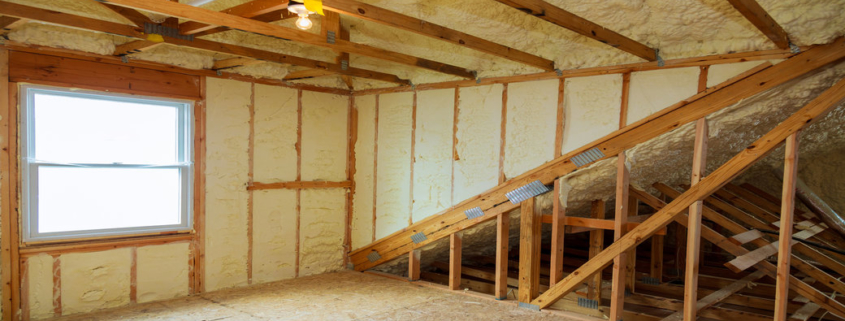
Air sealing is the process of restricting air movement through tiny cracks and gaps in your business or residential property. When you run heating or ventilation in your home this builds pressure. If leaks and gaps are present it can transfer conditioned air to the outside reducing efficiency. Air leakage can account for around 30% of heating costs. Air sealing prevents the loss of this conditioned air by filling in the tiny cracks and gaps.

A massive amount of energy is wasted due to the air leaking from cracks, holes and gaps at your property. This can cause several issues including increased risk of condensation and cause health risks caused by damp and drafts. Broadsword can work with you to inspect and plan the repair of these cracks and gaps to ensure your property is airtight.  Doing so can also have a monetary savings on your heating bills as air sealing is proven to reduce energy costs.

How Air Leakage Affects your business or residential property?

Air leakage not only affects energy loss but also contributes to property deterioration. Obvious air leakages will be easy to spot and easily resolved; however, hidden air leakages are the root problem and can be harder to find and treat. Air that leaks must be replaced and is usually drawn in from the ground. If you don’t have an effective vapour barrier, moisture can be absorbed causing mould development, water damage or animal infestations. Moisture can enter your property using the tiniest gaps. This can aid in the damage of your properties foundations.

How to Air Seal your Home?

Here is a brief breakdown of how a home is air sealed:

  • Loft Air Sealing – Any hole made in your ceiling is called a thermal bypass or an air leak. This extends to lights, fans, plumbing stacks and chimneys. Most of these holes can have foam sprayed into them; however, items like chimneys and recessed lights require more specialist methods.
  • Plug Outlet Air Sealing – The simplest method of air sealing an outlet is to use foam backers behind outlet covers and child proof plugs to prevent air coming out the holes.
  • Basement and Crawlspace Air Sealing – There are a lot of possible leakage spots in the basement. When looking to air seal your business or residential property, the basement should be your priority. Rim joists and the sill plate that it sits on can be a major leakage point and can have a lot of holes surrounding it. These are usually filled with caulk or foam.

What are the Benefits of Air Sealing?

  1. Energy Efficiency – The energy consumption of your commercial or residential building usually depends on the age of it. New properties are built with energy efficiency in mind, whereas older properties can tend to use a lot more. Both new and old properties can benefit from air sealing but the changes in efficiency to older houses can be dramatic with anything up to a 50% saving on energy expenses.
  2. Increase of Indoor Air Quality – Fresh outdoor air is a good way of increasing indoor air quality; however, this should be controlled using a ventilation system and not through cracks and gaps. These gaps are uncontrolled and can carry moisture, pollution and allergen into your property causing a whole host of problems including medical issues like asthma and allergies.
  3. Prevent Mould Deterioration Around your Property – Mould spores travel through the air and can be traced pretty much anywhere. They can be taken along by the wind and end up in all sorts of nooks and crannies of your property including attics, basements and crawl spaces. If the tiny cracks and gaps aren’t filled and these spores mix with the moisture that has infiltrated into your property mould will begin to appear in these spaces. Air sealing maintains these areas of your property causing them to be dry and prevent the spread of mould.
  4. Increased Comfort – Cracks and gaps in your property can cause drafts, noticeable temperature differences in rooms and cold floors and walls. This can create a very unpleasant environment which can be made infinitely better by air sealing.
  5. Prevents Property Deterioration – Toxins, pollution and mould can all impact on your property’s foundations. Air sealing will prevent all of these particles from entering your loft and crawl spaces causing water damage, vermin infestations and mould development.
  6. Cost Effective – Air sealing repairs can start saving you money as soon as it’s done. Your energy bills can improve, along with your air quality and your peace of mind that you will not need to pay out on unnecessary repairs due to air leakage.

To book an inspection with our fully qualified and insured team contact Broadsword on 02380 675 888. The team will be able to talk through your concerns and arrange an inspection at your commercial or residential property.

https://broadsword-group.co.uk/wp-content/uploads/2020/02/rsz_adobestock_181246978.jpg 433 1040 joannevickers https://broadswordgrp.wpengine.com/wp-content/uploads/2019/11/broadsword-logo.png joannevickers2020-01-08 13:01:512020-02-10 13:07:49What is air sealing?
Contractors pay

Are developers and local authorities now in competition?

December 12, 2018/in Home Page news feed, News, Residential

Theresa May’s removal of the local authority borrowing cap during this year’s party conference was a cause for concern among property developers.

In many ways it was a pragmatic step – one many described as long overdue. In theory it serves to diversify the housing market, stimulate industry capacity and help councils meet their affordable home requirements.

However, it also put local authorities into direct competition with small and regional developers, potentially causing a profound restructuring of the construction industry.

Councils are now able to potentially bid for development sites at the expense of local developers.

Authority advantage

Many authorities have already set up their own development companies. These are either standalones or joint ventures with recognised developers, who bring to the table a wealth of experience in marketing, styling and quality. These partnerships are important – local authorities won’t chase large-scale projects until they have gained the confidence and manpower to deliver.

In approaching development work, local authorities have a number of advantages over small and regional developers. They enjoy access to cheaper funding, as they are able to borrow from the government at very low rates. And because they can also borrow for longer periods of time, they can adopt longer-term building strategies.

Historically, funds had to be used by a specific date (often not very far in the future), which tended to prohibit financing larger developments this way, given the time it usually takes to see a large development through to completion.

However, the revised funding available to local authorities can now be drawn down over a much longer period of time. In fact, local authorities have been buying up investment property using government funding, extended at these low rates, to secure an investment yield to provide surplus income. It’s these same funding conditions that are available for development.

In addition, local authorities are better able to meet affordable housing targets, whether on the same site or on another site, as changes in the rules over compulsory purchase will speed up delivery timelines and improve viability. As council-run development companies are not profit-driven, they are able to maintain a greater focus on delivering both the housing types and numbers required.

The advantages council-run businesses have may allow them to experiment with new techniques, such as modular construction. This approach removes weather from consideration, and brings factory-style efficiency and better quality control into the production process.

Many larger construction firms already use modular production, but the industry would benefit from more development firms employing it.

What now for SMEs

Overall, local authorities have a better hand to play with following the borrowing cap’s removal.

The larger developers, with their enormous technical resources, manpower and brand value, will undoubtedly look to cover their positions by working with local authorities. Smaller builders, however, cannot always offer the same advantages.

All is by no means lost for the smaller players. One option is to move away from generic housing to more specialist markets such as retirement living, student accommodation, buy-to-rent and micro-accommodation.

In the future we could see a more diversified construction trade with a much more prominent role for the local authorities, while smaller firms place bets on specialised methods of construction and manufacture.

Source: Construction News

https://broadsword-group.co.uk/wp-content/uploads/2018/04/Contractors-pay-1030x433.jpg 433 1030 joannevickers https://broadswordgrp.wpengine.com/wp-content/uploads/2019/11/broadsword-logo.png joannevickers2018-12-12 11:45:452018-12-18 11:49:28Are developers and local authorities now in competition?
commercial

Commercial building was the best performing area of construction output in August

September 5, 2018/in Home Page news feed, News

Commercial building was the best performing area of construction output in August 2018, followed closely by residential work.

However, the latest expansion of housing activity was the weakest since March, and civil engineering workload decreased for the first time in five months. A number of survey respondents cited a lack of new work on infrastructure projects.

Overall, August data pointed to a renewed slowdown in output growth across the UK construction sector but positive signs included an increase in new business and employment growth maintaining the recent peak level seen in July.

At 52.9 in August, the seasonally adjusted IHS Markit/CIPS UK Construction Purchasing Managers’ Index (PMI) eased from July’s 14-month high of 55.8, but remained above the crucial 50.0 no-change mark. The latest reading signalled a moderate overall rise in construction output, with the rate of expansion the weakest since May.

Anecdotal evidence cited resilient client demand and supportive economic conditions, but there were also reports that Brexit-related uncertainty continued to hold back investment spending. Higher overall workloads encouraged additional staff recruitment across the construction sector in August. Survey respondents noted tight labour market conditions and shortages of suitably skilled candidates to fill vacancies.

Purchasing activity increased for the eleventh consecutive month in August, although the latest upturn was the weakest since March. Low stock and labour shortages among suppliers continued to impact on delivery times for construction products and materials. The latest deterioration in supplier performance was the greatest seen for almost three-and-a-half years. Despite stretched supply chains and rising energy-related costs, latest data indicated that input price inflation edged down to its lowest since July 2016.

UK construction companies are optimistic that business activity will expand over the coming 12 months, but the degree of confidence eased to its weakest since May. Survey respondents cited confidence about achieving organic growth through new project wins and geographical diversification, while Brexit uncertainty remained the main factor cited as holding back sentiment.

Tim Moore, associate director at IHS Markit and author of the IHS Markit/CIPS Construction PMI, said: “The construction sector slipped back into a slower growth phase in August, with this summer’s catch-up effect starting to unwind after projects were delayed by adverse weather at the start of 2018.

“Civil engineering was the worst performing area of the construction sector, with output in this category falling for the first time since March amid reports citing a lack of new work on infrastructure projects. House building saw a particularly sharp slowdown since July, meaning that commercial construction was the fastest growing sub-sector in August.

“There are some encouraging takeaways from the latest survey, especially the resilient degree of new business growth in August and a strong upturn in staff recruitment. Survey respondents noted that they are confident about achieving organic growth at their businesses in the coming 12 months. The degree of optimism reported in August remained constrained by external factors, including domestic political uncertainty, stretched supply chains and shortages of suitably skilled labour.”

Duncan Brock, group director at the Chartered Institute of Procurement & Supply, said: “Cracks in the construction sector’s masonry were beginning to show again this month, and the house building sub-sector was hit the hardest as it reported the poorest performance since March this year.

“Civil engineering saw a drop off in larger infrastructure projects and found itself in contraction territory. Levels of new work held moderately steady overall, but with any significant growth held back by Brexit uncertainty. It was also the logjams in supply routes that hampered work in hand where material and skills shortages meant vendor performance deteriorated to its worst level since March 2015.

“If there is anything positive to note from this month, it would be that the rate of hiring remained strong. However, persistent pressures from skills shortages and slow rates of new orders will continue to hit business optimism still trailing below the survey’s average.

“The sector is hovering too close for comfort to the no change mark, which makes it a contender for more disappointment next month. Though the path to Brexit is paved with good intentions, without significant progress the sector will soon be building castles in the air rather than on solid ground.”

Source: The Construction Index


https://broadsword-group.co.uk/wp-content/uploads/2018/09/rsz_commercial_building.jpg 433 1030 joannevickers https://broadswordgrp.wpengine.com/wp-content/uploads/2019/11/broadsword-logo.png joannevickers2018-09-05 10:31:272018-10-02 14:12:05Commercial building was the best performing area of construction output in August
Search Search

Recent Posts

  • Why the Most Sustainable Building May Be the One Already Standing
  • Why Early Coordination Between Trades Prevents Costly Fit-Out Delays
  • Why Acoustic Performance Is Becoming Essential in Modern Commercial Interiors
  • Building Through the Heat: How Construction Projects Can Prepare for British Heatwaves
  • How the Right Render System Supports Building Performance and Appearance

Recent Comments

    Archives

    • September 2026
    • August 2026
    • July 2026
    • June 2026
    • May 2026
    • April 2026
    • March 2026
    • February 2026
    • January 2026
    • December 2025
    • November 2025
    • October 2025
    • September 2025
    • August 2025
    • July 2025
    • June 2025
    • May 2025
    • April 2025
    • March 2025
    • February 2025
    • January 2025
    • December 2024
    • November 2024
    • October 2024
    • September 2024
    • August 2024
    • July 2024
    • June 2024
    • May 2024
    • April 2024
    • March 2024
    • February 2024
    • January 2024
    • December 2023
    • November 2023
    • October 2023
    • September 2023
    • August 2023
    • July 2023
    • May 2023
    • April 2023
    • March 2023
    • February 2023
    • January 2023
    • December 2022
    • November 2022
    • October 2022
    • September 2022
    • August 2022
    • July 2022
    • June 2022
    • May 2022
    • April 2022
    • March 2022
    • February 2022
    • January 2022
    • December 2021
    • November 2021
    • October 2021
    • September 2021
    • August 2021
    • July 2021
    • June 2021
    • May 2021
    • April 2021
    • March 2021
    • February 2021
    • January 2021
    • December 2020
    • November 2020
    • October 2020
    • July 2020
    • June 2020
    • May 2020
    • April 2020
    • March 2020
    • February 2020
    • January 2020
    • December 2019
    • October 2019
    • September 2019
    • August 2019
    • July 2019
    • June 2019
    • May 2019
    • April 2019
    • March 2019
    • February 2019
    • January 2019
    • December 2018
    • November 2018
    • October 2018
    • September 2018
    • August 2018
    • July 2018
    • June 2018
    • May 2018
    • April 2018
    • March 2018
    • February 2018
    • January 2018
    • December 2017
    • November 2017
    • October 2017
    • September 2017
    • August 2017
    • July 2017
    • June 2017
    • May 2017
    • April 2017
    • June 2016
    • April 2016
    • March 2016

    Categories

    • Accreditation
    • Charity Events
    • Commercial
    • Fire Protection
    • Home Page news feed
    • Interiors Fit Outs
    • News
    • Other
    • Projects
    • Residential
    • Screeding
    • technology
    • Vacancies

    Meta

    • Log in
    • Entries feed
    • Comments feed
    • WordPress.org

    Why the Most Sustainable Building May Be the One Already Standing

    The construction industry is under growing pressure to reduce…
    September 11, 2026/by Luke Mostran

    Why Early Coordination Between Trades Prevents Costly Fit-Out Delays

    A commercial fit-out rarely fails because of one single mistake.…
    August 27, 2026/by Luke Mostran

    Why Acoustic Performance Is Becoming Essential in Modern Commercial Interiors

    Modern commercial interiors are expected to support several activities…
    July 15, 2026/by Luke Mostran

    Building Through the Heat: How Construction Projects Can Prepare for British Heatwaves

    Hot weather is not always the first thing people associate with…
    June 12, 2026/by Luke Mostran

    How the Right Render System Supports Building Performance and Appearance

    Rendering is often seen as the final touch on a building’s…
    May 14, 2026/by Luke Mostran

    Why Fire Protection Should Be Considered Early in Commercial Building Projects

    Fire protection is one of those areas that can cause major issues…
    April 16, 2026/by Luke Mostran

       02380 675888

      hello@broadsword-group.co.uk

    SEE WHAT WE CAN DO FOR YOUR BUSINESS

    © Broadsword Group Ltd 2025 – website by Zap

    Terms of Service   |   Privacy Policy   |   Sitemap


    logo strip
    Scroll to top Scroll to top Scroll to top