Tag Archive for: Health & Safety

How to Plan a Residential Refurbishment: Steps and Tips

Taking on a residential refurbishment is exciting, but it can also feel overwhelming if you don’t know where to start. Whether you’re updating a single room or undertaking a full home renovation, good planning is key to ensuring your project runs smoothly, stays on budget, and delivers the result you’re hoping for.

In this post, we’ve broken down the essential steps and tips for planning a successful refurbishment.

Step 1: Define Your Goals

Before any work begins, it’s important to be clear on what you want to achieve. Are you modernising a dated property, improving energy efficiency, or creating more space for family living? Having clear objectives helps guide your design choices and prevents scope creep once the work is under way.

Step 2: Set a Realistic Budget

Refurbishment costs can escalate quickly if they aren’t carefully managed. Be sure to factor in not just construction and labour costs, but also finishes, fixtures, and a contingency allowance for unexpected issues. A well-planned budget avoids nasty surprises later down the line.

Step 3: Understand Regulations and Permissions

Depending on the scale of the work, you may need planning permission or approval under UK Building Regulations. This is particularly important if you’re altering the structure, adding extensions, or changing the use of a property. Always check with your local authority before work starts to avoid costly delays.

For example, fire protection and sound insulation are common requirements in multi-residential refurbishments. At Broadsword, we deliver compliant residential refurbishment and fire protection services that meet these standards.

Step 4: Choose the Right Team

A successful refurbishment relies on experienced professionals who understand the technical, regulatory, and design aspects of residential projects. From architects and designers to specialist contractors, choosing a skilled team will ensure the work is carried out safely, legally, and to a high standard.

Step 5: Plan for Disruption

Refurbishments often involve dust, noise, and temporary disruption to your home life. Make arrangements for alternative accommodation if necessary, particularly for major works like screeding or extensive fit-outs. Even small projects benefit from having a clear plan to minimise disruption.

Step 6: Don’t Overlook Fire and Safety Measures

It’s easy to get caught up in choosing new kitchens or flooring, but fire safety, compartmentation, and proper ventilation are just as important. Investing in fire protection and compliant installations protects your property and your family for the long term.

Step 7: Keep Communication Open

Regular updates with your contractor or project manager are essential. A simple weekly meeting or call can help spot issues early, adjust timelines, and keep everyone aligned with your goals and budget.

Tips for Success

  • Prioritise quality over shortcuts – it may cost more upfront, but it pays off in longevity.

  • Think about resale value – design choices should balance personal taste with broad appeal.

  • Consider sustainability – eco-friendly materials and energy-efficient systems can reduce running costs and increase value.

Final Thoughts

A residential refurbishment is an opportunity to completely transform a property and tailor it to your lifestyle. By taking the time to plan carefully, assemble the right team, and stay on top of compliance, you can ensure the process is smooth and the results are worth the investment.

At Broadsword, we specialise in residential refurbishments that combine design vision with technical expertise. To explore how we can support your next project, visit our Residential services page or contact us to arrange a consultation with one of our experts.

Top 7 Fire Protection Mistakes to Avoid in Commercial Buildings

Fire protection is one of the most important elements of any commercial building, yet it’s also an area where mistakes are still all too common. While some issues may seem minor, they can undermine safety, leave a building non-compliant, and even put lives at risk. For developers, building owners, and contractors, understanding these common pitfalls is essential to ensure projects are both safe and compliant from day one.

This article explores seven of the most frequent fire protection mistakes seen in commercial buildings—and how to avoid them.

1. Blocked Fire Exits

One of the simplest yet most common issues is blocked fire exits. It’s not unusual to find exits obstructed by deliveries, furniture, or storage, but this can cause serious delays in an emergency. Fire exits should always remain fully clear and accessible at all times.

2. Fire Doors Left Open

A fire door only works if it’s closed. Too often they are wedged open for convenience, but this undermines their ability to stop the spread of smoke and fire. Regular checks and staff awareness are vital to ensure fire doors perform their role when needed.

3. Incorrect Fire-Stopping Materials

Fire stopping is critical around pipes, ducts, and cables that pass through walls and floors. Using uncertified foams or fillers instead of proper fire-rated materials is a common mistake that can fail inspections and, more importantly, compromise safety.

4. Lack of Fire Alarm Maintenance

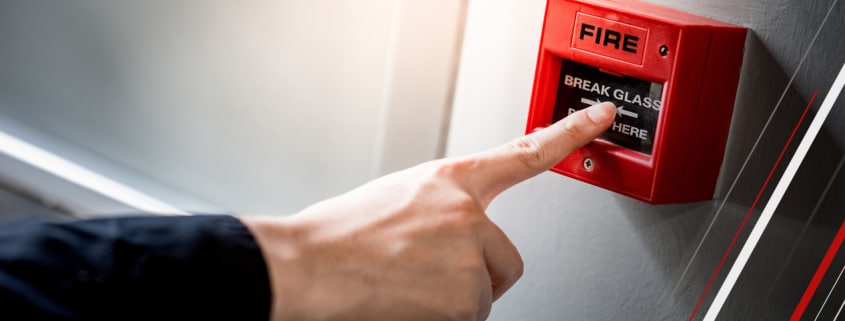
Even the best-designed fire alarm system is useless if it isn’t regularly tested. Alarm systems require routine maintenance and inspection to meet legal requirements and provide peace of mind that they will operate correctly in an emergency.

5. Poor Compartmentation

Compartmentation is the principle of dividing a building into sections to slow down the spread of fire. Gaps left during installation or poorly fitted partitions can allow flames and smoke to spread quickly, reducing evacuation times and increasing risks. For more information on our fire protection services click here.

6. Outdated Fire Risk Assessments

A fire risk assessment is not a one-off task. As regulations evolve and the use of a building changes, assessments need updating. An outdated report will not provide adequate protection or meet compliance standards.

7. Inadequate Staff Training

Even with the most advanced fire protection systems, staff need to know what to do. Without regular training and fire drills, human error can undo even the best safety measures. Everyone in the building should understand the procedures for evacuation and emergency response.

Final Thoughts

Avoiding these mistakes doesn’t have to be complicated, but it does require diligence, regular checks, and the right expertise. By getting fire protection right from the start, you can ensure compliance, safeguard occupants, and provide reassurance for years to come.

If you would like to discuss please contact us to arrange a consultation with one of our experts.

FIRAS

We are FIRAS registered

As part of our ongoing expansion, and to offer as many services as possible, we have recently become FIRAS registered.  

As a requirement of the FIRAS Schemes, certificated companies are required to employ, on a permanent or contract basis, competent Supervisors and Technicians (Operators) whose technical and practical competence is assessed by FIRAS Inspectors in the trade disciplines for which certification scope is held. A register of competent employees is maintained for each certificated company, which is regularly reviewed to ensure that the company maintains a competent workforce whose abilities remain current with the workscope the company provides.

Once certificated, all FIRAS Registered Installer Companies are subject to ongoing random inspection of their installation work on ongoing contracts along with an annual audit of their office systems by FIRAS Inspectors to ensure that compliance with FIRAS Scheme Requirements is maintained.

FIRAS are a voluntary, third party certification for installation contractors of both passive and active fire protection systems, operated by Warrington Certification, and accredited by UKAS to EN45011.

FIRAS certification started in 1994 and has been instrumental in improving standards of installation of fire protection products/systems to the benefit of the construction industry and the clients it serves.

Why choose a FIRAS certificated installation contractor?

FIRAS certificated contractors are required to undergo a 3 stage assessment process. Only when the applicant contractor has satisfied all of the following criteria is certification granted:

• Assessment of office management systems.

• Assessment of workmanship of site for all trade disciplines for which certification is sought.

• Competence assessment of supervisory and installation employees.

If the job is not installed to Firas standards by the sub contractor (MGN Fire Protection), then FIRAS cannot issue certification until the works are up to the above criteria.

FIRAS certification is awarded to the contracting company not the staff. Should a contractor wish to increase their scope of certification, a separate application must be made to attain the additional certification.

All FIRAS site inspectors have technical and practical knowledge and experience in fire protection.

FIRAS certificated contractors are subject to an annual audit of their offices and ongoing, random surveillance site inspections where competence and workmanship are assessed.

FIRAS inspectors conduct additional inspections of the work carried out by the certificated contractor on request to satisfy client’s needs.

We at present can offer penetration sealing services – techniques that will minimise the effect a fire has on the fabric of a building.

This must look at dividing a building into compartments that can be closed to stop the spread of fire – this is known as compartmentation. Confining a fire to its point of origin is the key objective of any fire safety measure..

Compartments with fire-separating elements, on the other hand, can confine a fire to its area of origin so it is essential to maintain integrity where services breach fire resting walls in such areas as:-

• multi-service openings through walls and floors

• blank service openings through walls and floors

• combustible pipes (plastics)

• cavity barriers

• construction joints

• any imperfection of fit to a fire-rated building element

Proprietary penetration seal/service opening fire protection systems include boards, batts, mortars, sealants, collars, wraps, pillows, curtains and linear joints. Penetration seal systems are available for up to 4 hours integrity and, in some cases, insulation against a cellulosic fire, in accordance with national and European standards. Products are also available to protect against hydrocarbon fires.

•Source FIRAS / EAPFP

construction inspection

A sharp decline in construction inspections isn’t good news

According to Unite, the UKs principal construction union, there has been a large drop in the number of construction inspections carried out. Unite is seeking urgent meetings with the Health and Safety Executive (HSE) after asking for a freedom of information act. (FOI)

The FOI response from the HSE revealed that the number of unannounced inspections occurring in the construction industry fell by 14 per cent in just 12 months. In 2015/16 there were 9,219 inspections and this reduced to 7,912 in 2016/17. The reduction in inspections follows a trend as there was also a 4 per cent decrease in the previous 12 months.

Unite continue by explaining that construction is the most dangerous industry in the UK. Several academic studies have revealed a clear correlation between the frequency of inspections and compliance with safety laws.

Since receiving the FOI response Unite has written to the HSE and David Gauke the new work and pensions secretary, seeking meetings. Unite are seeking information from Mr Gauke about the government’s future plans for the HSE and safety laws. The HSE’s funding is set to be cut by 46 per cent, compared to what the organisation received in 2010, by 2020. Successive Conservative governments have scrapped safety laws and there are concerns this could increase as part of the Brexit process.

Unite are seeking a meeting with the HSE to ascertain exactly what caused the latest decrease in construction inspections and what strategies are being put in place to reverse the trend.

The regional breakdown also revealed marked differences in inspection activity with just one region recording an increase in the past 12 months. The figures were as follows, Eastern -22 per cent, East Midlands -26 per cent, London -14 per cent, North East -39 per cent, North West -5 per cent, Scotland +9 per cent, South East -8 per cent, South West -32 per cent, Wales -15 per cent, West Midlands -13 per cent, Yorkshire -4 per cent.

Unite assistant general secretary Gail Cartmail, said: “These figures are alarming as they demonstrate a huge decrease in vital lifesaving inspections. Sadly there remain far too many employers who are all too willing to cut safety regulations and it is only the genuine prospect of an unannounced inspection which keeps them in check.

Accidents on building sites are not that rare of an occurrence, and sometimes this simply could be because of human error. Inspections give piece of mind to both workers and contractors, and the more inspections there are the safer our building sites. Health and safety are of paramount importance, and cutting corners will only lead to more accidents and ultimately deaths.

We look forward to finding out what Unite manage to glean from the HSA.

H&S Vacancy2

VACANCY: Health & Safety Co-ordinator

Due to the continued expansion of the Broadsword Group we have an exciting opportunity within the business for a permanent, full time Health & Safety Co-Ordinator to work with our current team maintaining and developing our existing systems.

The ideal candidate will be expected to;

  • Assist all departments to undertake detailed RAM’s & implement solutions on any specific issues identified
  • Carry out accident investigations with the assistance of the Management Team
  • Provide information & advice on Health & Safety to all levels
  • Review and implement staff and subcontractor training
  • Carry out site Health and Safety audits throughout the Company
  • Maintain accurate records of assessments & actions
  • Co-ordinate with Broadsword Senior Management and Directors implementing Company directives
  • Co-ordinate and monitor the consistency of site level toolbox talks
  • Complete H&S questionnaires, attend seminars and site H&S meetings
  • Work with clients to ensure continued development, pre-empt industry trends and implement change
  • Work with the current management team to develop existing systems to achieve ISO & SSIP accreditations.

Preferably, the candidate should have industry experience and a formal qualification (NEBOSH or IOSH) or a desire to develop a career with formal training.

Salary package is negotiable and commensurate with qualifications and experience.

Please issue CV and covering letter to hello@broadsword-group.co.uk or contact our head office on 02380 675888 if you require any further dialogue.