Tag Archive for: construction

Thermal Insulation

Possible new thermal insulation

Manufactured in Latvia, it is an alternative way of recycling waste paper and hemp fibre into an innovative heat insulation material with improved thermal conductivity. The new insulation mats are designed to be easy-to-install, structurally sound and with thermal insulation properties comparable to those of mineral wool.

Other advantages will include breathability, recyclability and health safety benefits. The product will be manufactured at about one-third of the cost of pure natural fibre material. It will be displayed in retail building material stores making it widely accessible to individual homeowners.

The primary objective is to promote the amount of recycled waste paper and waste paper sorting activities in the region by developing a prototype of technology for producing the soft insulation panels and developing the optimal recipe for the thermal insulation layers (density, composition, thermal conductivity, air and sound permeability). A huge amount of waste paper arising from household waste is buried at landfills or burned, despite the fact that waste paper is recycled relatively well (on average approx. 70% in Europe).

The expected results are:

A stable production process capable of manufacturing 250 cubic metres per day of paper-hemp building insulation mats (batts), which can supply 7% of the estimated market of mineral wool insulation in Latvia;

An expected lifetime of at least 10 years for the pilot plant, which will manufacture different blended insulation materials, develop and test new combinations and mixes and provide demonstration material for different markets and applications; 3) All required certification and eco-labelling for demonstration and sale of the insulation

All required certification and eco-labelling for demonstration and sale of the insulation mats in Latvia and three key markets – UK, Germany, and Finland. The news mats will be installed in demonstration buildings in all four countries;

Draft green procurement specifications and technical information on the design, installation, use and end-of-life disposal of the paper-hemp insulation mats for each of the four target markets;

Manufacturing process and new product presented to at least 50 organisations in Europe, including potential technology entrepreneurs, manufacturers of loose paper or hemp insulation, paper collectors and recyclers, and professional associations of civil engineers and architects.

The benefits:

  • Reducing greenhouse gas emissions;
  • Reducing the use of hazardous substances;
  • Waste management promotion;
  • Energy saving;
  • Circular economy promotion;
  • Increasing employment

As yet there has been no certification of the product, but it is good to see more new and sustainable building materials coming to the market.

To find out more please visit the website

Risk Assessment

Fire Risk Assessments Explained

Having a process in place to minimise fire hazards and risks is crucial to safety. Carrying out a fire risk assessment is paramount to ensuring the premises are taking every precaution possible to ensure that the risk of fire is as little as possible.

What is a fire risk assessment?

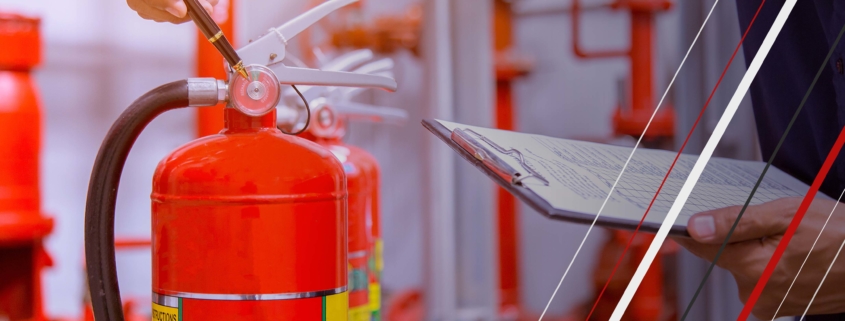
A fire risk assessment is a highly important process of identifying possible fire hazards and also a process of evaluating any potential risks to people, property, the environment, and any assets. It evaluates any existing fire precautions and allows the assessor to decide whether the existing precautions are enough without further precautions.

What does a fire risk assessor do?

This person is responsible for ensuring that all fire risk assessments are completed and will document any significant findings. They have to be competent with fire safety and must have sufficient knowledge and training.

Why are fire risk assessments important?

It is actually a legal requirement to carry out fire risk assessments in virtually all non-domestic premises under the Regulatory Reform (Fire Safety) Order 2005 in England and Wales. There are also similar legislations in place in Scotland and Ireland. The Fire (Scotland) Act 2005 is in place for Scotland and Fire Safety Regulations 2010 is in place in Northern Ireland.

Who is responsible?

The responsibility for ensuring a fire risk assessment is carried out lies with the ‘responsible person’. This is usually the owner or occupier of the premises and is often an organisation or employer rather than a specific individual. Tasks can be delegated to other persons nominated to monitor management of fire safety, but the responsibility will ultimately lie with the ‘responsible person’.

What’s included in fire risk assessments?

A fire risk assessment’s aim is to identify any potential risks and hazards within the premises. This can include any sources of ignition (for example naked flames, heaters, cooking equipment, sources of fuel and sources of oxygen). Other factors should also be taken into consideration. For example, flues and ducts, penetrations of fire compartments, and excessively long escape routes[i].

People who may be at risk should always be considered when conducting a fire risk assessment. This is anyone such as employees and anyone entering the building to conduct work. The public should also be considered. Actions to be taken should be created to reduce any risks that have been identified when conducting the assessment. For example, fire escapes should be kept clear of obstructions, and keeping combustible materials stored away from any ignition sources.

[i] https://www.ifsecglobal.com/fire-news/guide-fire-risk-assessment-get-one/

If you have any questions regarding fire risk assessments, please get in contact.


suspended ceiling

Types of Suspended Ceilings

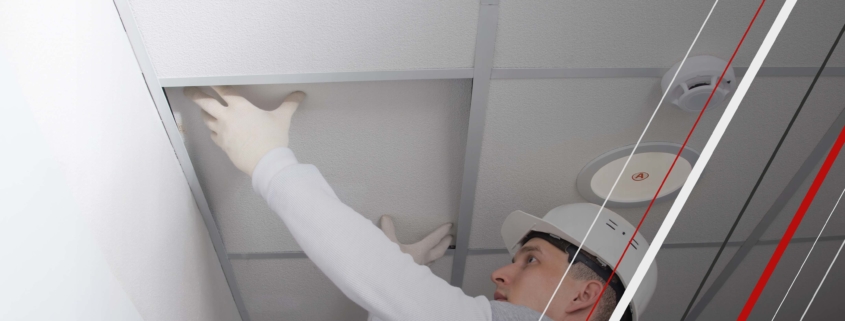
Suspended ceilings can be described as a secondary ceiling that is suspended from a structural floor slab above producing a space between the top of the suspended ceiling and the bottom of the floor slab.

These ceilings can be incredibly useful as valuable space can be offered for building supplies that would be exposed otherwise. Suspended ceilings can also be used to provide a platform for the installation of light fixtures, smoke detectors and CCTV systems, for example. Many materials can be used to make suspended ceilings.

Lath and plaster

Lath and plaster is a method that can be used to make suspended ceilings and is typically made of narrow strips of wood (also known as laths) that are nailed across the wall studs or ceiling joists horizontally and are then coated in plaster. Lath and plaster is a permanent, sturdy form of construction. It can however be costly.

After the introduction of plasterboard in the 1930s however, lath and plaster became a less used method.

Plasterboard

Plasterboard can also be known as drywall, and is another method used for suspended ceilings. It can be used in both commercial and residential settings and is moderately affordable and durable. It gives a flat appearance. In order to gain access to the plenum space, removable panels can be installed.

Panels or tiles

Ceiling tiles are typically lightweight and are demountable things that can be inexpensive and generally fairly straightforward to install. The most common type of ceiling tile is mineral fibre, but other materials are also available, such as fibreglass, metal, wood, plastic and others.

Free span

Free span suspended system planks sit on the margins of a perimeter trim and are similar to tiles. This system is popular in corridors as it’s simple to keep up and install.

If you have any questions regarding suspended ceilings, please get in contact.


air sealing

Air Sealing in Buildings

Air sealing is an effective way to help prevent fires from spreading. Buildings with air leakage can mean that a fire can spread dangerously fast as the air fans the flames of the fire. This can also seriously effect energy efficiency.

Air leakage can occur when outside air enters the building and conditioned air leaves the building. It is not recommended to rely on air leakage for natural ventilation as this can affect moisture problems within the building’s structure which can affect the health of the occupant, as well as the durability of the building structure.

Buildings must also comply with Building Regulations L2. There can be major problems for health and safety if these regulations are not adhered to. The regulations stipulate appropriate amounts of air leakage and energy conservation for all projects in the UK.

There are many benefits to air sealing, including reducing the cost of internal cooling and heating, increasing the durability of a building, improving internal air quality, comfort of occupants and air sealing is more environmentally friendly.

There are many things that can affect a building’s air leakage, such as weather, and internal building ventilation systems. As well as increasing the spread of a fire, having air leakage can also result in cold and draughty buildings, which are not pleasant to work or live in.

Using methods of air sealing, these problems can be eliminated, and buildings can become comfortable for residents and inhabitants, as well as workers within the building. It can also prevent catastrophic fires and can provide cash savings.

Further cost can be saved when installing air sealing systems and the installation of these systems can prevent the need for further work concerning air flow within the building.

If you have any questions regarding air sealing, please get in contact.


fire safety checking

New duties under Fire Safety (England) Regulations 2022

When the Grenfell Tower fire happened in London in 2017, it made headline news all over the country. The fire launched an enquiry into the law regarding fire safety in buildings. In 2022, a new set of regulations were announced. These regulations will be known as The Fire Safety (England) Regulations 2022 and will implement many of the recommendations that were made in the Phase 1 report of the Grenfell Tower inquiry. The new regulations will come into effect 23rd January 2023.

In the case of high-rise residential buildings, which can be classed as a multi-occupied residential building that is at least 18 metres high or 7 plus storeys, the responsible person has to:

  • Electronically share information about the building’s external wall system to their local fire and rescue service (FRS) and they must also supply electronic copies of the floor plans and building plans.
  • Hard copies of the building’s floor plans must be kept, as well as an orientation plan of the building on a single page. The name and UK contact details of the person responsible must be kept in a secure information box, which can be accessed by firefighters.
  • Wayfinding signage must also be installed in all high-rise buildings that is visible even in low-light conditions.
  • Monthly (at minimum) checks must be carried out on lifts which are for the use of firefighters in high-rise residential buildings.

All communal fire doors must be checked quarterly in multi-occupied residential buildings that are higher than 11 metres in height. Also, annual checks must be conducted on flat entrance doors.

If these regulations aren’t followed, then there can be some severe consequences. Fines can be given, and even jail time in extreme cases of neglect to abide by the regulations. It’s very easy to think ‘that will never happen to me’ so sometimes regulations aren’t treated with the seriousness they deserve. This is why there are over 22,000 fires in the UK every year. The costs of a fire can be catastrophic.

If you have any questions regarding the new regulations, please get in contact.


risk assessment fire safety

Construction site fire safety regulations: Who’s responsible?

Rules and regulations should always be followed, especially with regards to fire safety. If a law has been broken or regulations not followed, then it can mean the difference between life and death. Despite the growth in performance that the industry has had over the last decade, the risk of injury, death and ill health are still too high.

However, the risks are not just limited to construction site workers. Other members of the public that happen to be near the site can also be injured if fire safety regulations are not being followed. Fires can of course spread, and any property that is adjacent to a construction site that has a large enough fire can be damaged.

Therefore, it is incredibly important to ensure that the correct people oversee fire regulations and are held responsible for following the rules.

One of the main laws that need to be followed is the Regulatory Reform (Fire Safety) Order 2005 (FSO).

Who is responsible?

FSO requires that a ‘responsible person’ must be designated as the fire safety officer. This person is usually the principal or main contractor in charge of the site.

It is also the client or other duty holders’ responsibility to ensure that the correct information is provided before starting construction work in order to ensure that adequate provision of precautions can be developed. The owner or occupier must also supply the contractor with sufficient health and safety information so that hazards and risks can be identified so that the correct procedures can be put in place.

What are the responsibilities?

The fire safety officer will need to complete a risk assessment and ensure that it consistently kept up to date. The business or building owner will be responsible for ensuring that this assessment gets carried out. This will need to be regularly reviewed in order to ensure that the documentation is constantly up to date. You could consider bringing in an expert, such as an IFE-registered risk assessor, if a comprehensive assessment is required.

Appropriate measures will need to be taken in order to minimise any risks to safety. Sources of fuel must be identified, and precautions must be taken, such as identifying fire escapes, and warning of and fighting fires, based on the risk assessment.

Warning

A warning system must be set up in order to alert people to any fires. This can be in the form of a temporary or permanent mains fitted fire alarm that is tested regularly, a klaxon, an air horn or whistle, however, this completely depends on the size of the building site. The warning will need to be recognisable by everyone and audible above all other noise.

Means of escape

Fire safety regulations set out that safe routes must be identified so that people can leave the building safely in the event of a fire. The risk assessment should determine the fire escape routes required (which have to be kept unobscured and clear), alternative routes to ground level should be provided where possible. Protection can also be provided if the correct fire doors and permanent fire separation are installed as soon as possible. Escape routes should allow people to congregate in a safe place where people can be accounted for. Fire escape routes must also be sign posted so that people unaware of the routes can easily find them. For enclosed escape routes, lighting should also be used.

Consequences of breaking the law

The local fire and rescue authorities may visit the construction site in order to make sure that the risk assessment has been conducted, and to ensure that appropriate fire prevention measures are in place.

If they deem that the measures are inadequate, then an informal notice can be issued. The local authorities can also issue a formal notice, and will inform you of how to fix the safety issues. An alterations notice could also be issued. This could be issued if the premises have high safety concerns or will have high risks if the premises changes. If a serious risk isn’t being managed, then an enforcement notice can be issued. It will detail what improvements are needed and by when. A prohibition notice could be issued if the fire and rescue authorities deem the site unsafe and the premises must be prohibited or restricted.

You can appeal to these notices if you disagree with the notices issued. You can arrange for an informal review from the local fire and rescue authorities. Within 21 days, you can appeal to the local magistrates’ court regarding the notice.

If fire safety regulations are not met, then there can be serious consequences, and you could even go to prison or get a fine. Fines of up to £5000 can be issued for minor offenses. Major offenses can have any fine issued and up to 2 years in prison.

Conclusion

In conclusion, it is incredibly important to ensure that all fire safety regulations are being followed and that the correct people are taking the correct level of responsibility in order to prevent injury or death. The main law to be followed is the Regulatory Reform (Fire Safety) Order 2005 (FSO). It’s also important to make sure it’s being followed so that no fines or sanctions are imposed.


If you have any questions regarding fire safety regulations, please get in touch.

hazardous materials

Construction sites: fire safety

Every year, a large number of fire incidents occur on construction sites and in buildings undergoing refurbishments. These incidents can cause many injuries or in severe cases, death. Some of these incidents can be entirely preventable. Therefore, it is extremely important that all legislation is being followed. This article will discuss steps that can be taken in order to prevent these events.

Legal requirements

The Construction (Design and Management) Regulations 2015 (CDM) document discusses duties in relation to fire safety in construction sites. Responsibility is set out in the Regulatory Reform (Fire Safety) Order 2005 (FSO) (England and Wales) document. However, you must constantly familiarise yourself with fire safety legislation on a regular basis as it constantly changes based on current events and trends.

It is down to the principal contractor to ensure that legislation is being followed for that country and also to ensure that risk assessments have been completed.

Fire hazards in construction sites

There are 2 main areas that fire hazards can be controlled, fuel sources and with respect to ignition. The risk of a fire starting can be drastically reduced if it can be controlled or the hazard can be eliminated.

Electrical faults

Electrical items can be a fire hazard whether fixed or portable and it is important to ensure that these items are properly cared for in order to minimise risk. It’s important to ensure that all electrical items are routinely tested and maintained to an appropriate standard. Portable Appliance Testing (PAT) should be carried out in accordance with the HSE guidance note HSG107 which advocates a risk-based testing policy.

Hot working

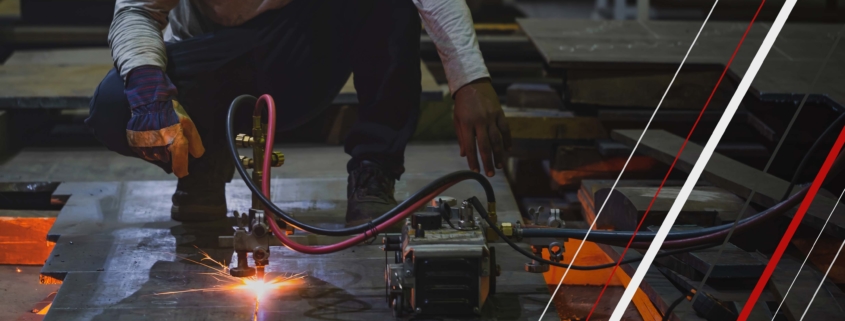
Hot works are defined as all “processes involving the generation of heat by a naked flame, electrical arc, sparks, and the use of bitumen boilers or grinding”. Unless it’s completely necessary, acetylene should not be used on site when using open flame gas cutting equipment or disc cutters.

Smoking

It may be an obvious one, but smoking can be a huge fire hazard, particularly when smoking around flammable materials on a construction site. Typically, smoking areas will be designated at a construction site in order to minimise fire risk.

Fuel sources

Flammable materials, such as fuel, should be properly contained in order to prevent fires. Management of these materials falls to the site manager and should include the whole process from procuring the correct fuel, its use and the potentially hazardous operations such as refuelling.


If you have any questions regarding fire safety on construction sites, please get in contact.

Boris Johnson

Boris Johnson promises thousands of construction jobs to boost recovery

Prime minister Boris Johnson has confirmed his government’s commitment to using construction to help rebuild the economy in the wake of the coronavirus crisis.

He has pledged to fund 40 new hospitals and provide large-scale investment in roads and rail projects.

A statement from Downing Street said the government was committed to an immediate £5bn package of capital investment in infrastructure projects, although some of those specifically named – such as a £1.2bn spend on schools – had been announced before, including in the Infrastructure and Project Authority’s pipeline of planned projects two weeks ago.

Johnson said a taskforce called ‘Project Speed’ would be set up to “scythe through red tape” and get projects delivered faster and hinted at changes to procurement rules to speed up appointments.

He said: “With every flood-defending culvert that we dig, with every railway station, hospital or school that we build, we will of course be tackling the next wave of this crisis by helping to create thousands of high-paid, high-skilled jobs.

“Because we know in our hearts that the furloughing cannot go on forever, and as the economy recovers we also know that the jobs that many people had in January are also not coming back or at least not in that form; we know that is the biggest and most immediate economic challenge that we face.”

A long-awaited National Infrastructure Strategy is due to be released in the autumn, Downing Street confirmed.

Balfour Beatty chief executive Leo Quinn welcomed Johnson’s speech: “The prime minister’s commitment to accelerate the UK’s long-term infrastructure pipeline is a critical factor for the country’s recovery. As well as stimulating regional and national economies, it will generate vast employment opportunities across the country and help provide our younger generations with employable skills. Without this, following the fallout from COVID-19, we could see widespread structural unemployment issues,” he said.

But Pinsent Masons infrastructure partner Jon Hart warned that the “eye-catching” commitments lack substance. He said: “The previously announced ‘pipeline’ contains a number of anomalies in respect of projects that have already been announced.

“During such an economically turbulent time, the government needs to remove uncertainty around approaches to procurement, particularly for schools and hospitals,” he added. “It will be interesting to see how tendering processes can be sped up and how the public-sector capacity gap within government for procuring schemes, when coupled with the industry’s own skills shortage, is going to be addressed.”

Federation of Master Builders chief executive Brian Berry called for the repair and maintenance sector not to be overlooked in government investment plans, and called for a VAT cut to boost that market.

UK Green Building Council chief executive Julie Hirigoyen said there needs to be more investment in specific measures to hit net-zero carbon emissions targets by 2050. She said: “The plans announced by the PM today make no reference to energy efficiency – perhaps the most urgent of all infrastructure priorities – that can create jobs right around the country, improve health and reduce costs to NHS, and increase consumer spending power by lowering energy bills.”

Source: Construction News

energy performance

The energy performance of commercial buildings needs improvement

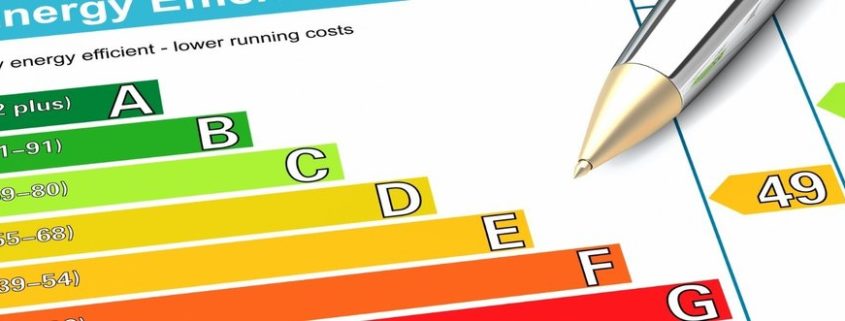
The government has published a consultation paper with proposals setting a minimum energy efficiency standard of EPC Band B by 2030 for privately rented buildings. 

Alongside this, the government promises to consult in 2020 on introducing mandatory in-use energy performance ratings for business buildings.

The move come in response to recommendations from the Committee on Climate Change (CCC) earlier this year and extensive lobbying by the UK Green Building Council (UKGBC).

UKGBC chief executive Julie Hirigoyen said: “Today’s announcement is most encouraging, as we have long called for more ambitious policies to improve the energy performance of our commercial buildings.  It is also a welcome complement to the government’s recently announced plans to strengthen energy efficiency standards for new homes – and shows that they are finally understanding the importance of tackling buildings emissions as we strive to meet our climate targets.

“By signalling a long-term Band B target for rented commercial buildings, the government is providing welcome certainty, which will help underpin businesses’ energy improvement plans and the supporting investment decisions.  As the market has already shown, minimum standards for rented buildings can have a transformative effect on their performance.

“We are also pleased to see the government at last acknowledging the importance of mandatory operational energy ratings for commercial buildings.  There is strong evidence from the Australian NABERS scheme, amongst others, that mandatory operational ratings can radically drive down energy use and reduce emissions.  The best-performing business buildings in Melbourne use between five and six times less energy than their London equivalents.”

Source: The Construction Index

flag

Industry backing for the government to relax its post-Brexit immigration proposals

The Construction Industry Training Board (CITB) report calls for the proposed one-year visa for ‘low-skilled’ workers to be extended to two years.

It also recommends that non-UK born workers entering the UK on a ‘low skilled’ visa be allowed to transition to a ‘high-skilled’ visa while working in the UK – train to remain.

And it proposes an ‘umbrella sponsorship’ scheme to allow self-employed non-UK workers to obtain the necessary employment sponsorship.

The CITB’s research found that 61% of migrants say they would choose to move from a ‘low’ to a ‘high’ skilled visa while continuing to work in the UK, and that 70% of employers of non-UK born construction workers see the ‘low skilled’ visa for people with level 2 qualifications as unsuitable for their businesses

The research report, Migration and Construction, finds that just 3% of construction employers have the necessary experience in handling visa applications, with two-thirds saying that the process is difficult.

Under the new post-Brexit immigration system – due to be introduced in January 2021 – employers will have to learn how to navigate the bureaucracy of visa applications for all foreign workers.

CITB policy director Steve Radley said: “Migrant workers have long played a key role in the UK’s construction sector. They make up 14% of the construction workforce, a percentage that rises to 54% in London. They give employers the flexibility to respond quickly to skills needs.

“Employers are raising real concerns about the future 12 month visa scheme. They want to see it extended to 24 months, and for workers to be given the opportunity to ‘train to remain’. A new scheme must additionally be put in place to enable self-employed migrants to work in the sector.

“It’s important that construction has the breathing space to adjust to new changes. CITB will work closely with Government to see that a simple, flexible migration system is put in place to support employers’ skills requirements, while industry grows its domestic workforce.”

Contractors have backed the recommendations

Alasdair Reisner, chief executive of the Civil Engineering Contractors Association (CECA), said: “The construction and infrastructure sectors have been facing a looming skills gap for some years, and it is deeply concerning that after the UK has left the European Union restrictions may be put in place to prevent non-UK born workers contributing to our industry.

“Currently, non-UK born workers account for 14% of UK construction’s workforce, rising to 54% in London.

“Industry is in the process of moving towards recruiting an extra 44,000 British-based people in construction by 2025 to meet projected demand.

“However for UK construction to achieve this goal while delivering the significant pipeline of projects the UK government has planned, those who currently contribute to our industry and the economic and social wellbeing of us all must be given the opportunity to continue to do so. That’s why we are calling on the government to take steps to ensure industry is ready for the post-Brexit migration landscape, by extending the period in which existing non-UK born workers are able to ‘train to remain.’

“Employers in the construction sector are actively working to grow the domestic workforce, but it will take time to do so. Unless the UK government changes its position, industry will be hamstrung in the immediate post-Brexit period, to the detriment of its ability to drive growth and deliver for the UK economy.”

Brian Berry, chief executive of the Federation of Master Builders, said: “The CITB report is absolutely right to highlight the barriers facing construction employers needing to employ non-UK workers. The government needs to look again at its post-Brexit immigration system to make it easier and simpler for small building companies needing to recruit non-UK labour. There is currently a serious skills crisis in the building industry which explains why 9% of the construction workforce is made up of EU workers. Given it takes many years to train a high-quality tradesperson there will, in the short term at least, continue be an urgent need to recruit non-UK labour. Without this labour the industry will not be able to deliver the homes and key infrastructure projects that are needed to underpin the UK’s national productivity and growth.”Mr Berry concluded: “The current non-EU migration system is exceptionally difficult for small employers to engage with taking as long as eight months in some instances to secure specialist tradespeople to come to the UK to work on sites. Most small businesses simply don’t have the time and resources to take that on. It would be very damaging just to extend this system to EU workers without seriously reforming it. Extending ‘low skilled’ visas from 12 months to 24 months; allowing non-UK born workers the opportunity to transition to a ‘high skilled’ visa; and the creation of an ‘umbrella sponsorship’ scheme would help ease concerns about how construction companies are going to fill the skills gaps.”

Souce: The Construction Index