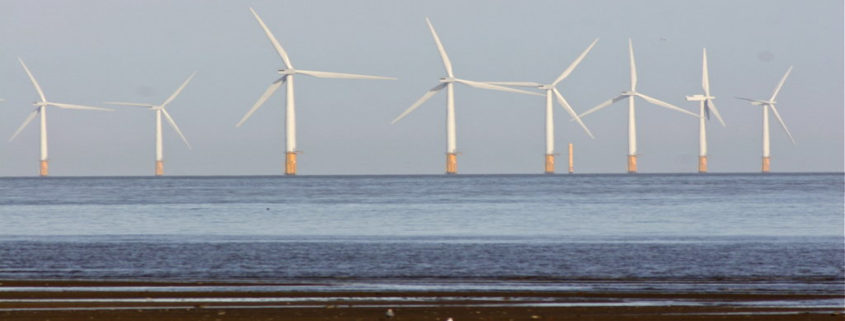
The cheapest form of UK energy could soon be offshore wind
Unless the government makes changes to planning regulations affecting turbines on land, offshore wind will overtake onshore wind as the least expensive source of renewable power in the UK, a leading analyst argues.
Currently, onshore wind is one of the cheapest sources of renewable power. However, without changes to planning restrictions, Cornwall Insight has estimated offshore wind is likely to surpass onshore wind power as the new source of cheap renewable energy. It believes that process will occur in less than 10 years.
Offshore wind has seen significant innovations, such as larger turbines with longer blades, allowing it to capture more wind. The graph reproduced here shows its levelised cost of energy (LCOE) falling below onshore wind by 2028.
The projections are based on capital costs by technology, fixed and variable operational costs, expected hurdle rates and locational factors such as transmission losses and connection fees, using current load factors for offshore wind at 58.4% and onshore wind at 38%.
Cornwall Insight senior modeller Tom Edwards said, “The renewable energy market is undergoing transition with onshore wind facing the real prospect of being usurped by its offshore cousin as the cheapest source of clean power in the not so distant future.
“Improvements in offshore technology are occurring all the time and for offshore wind the increasing the size of turbines is having a significant impact. With 8-MW models currently being deployed and larger 10-MW and 12-MW models under development, economies of scale will inevitably see costs fall.
“However, the playing field is not level in Great Britain when it comes to these comparisons. Analysis by the Onshore Wind Cost Reduction Taskforce found that LCOE energy savings of between £4MWh (US$5MWh) and £7MWh were possible with tip height and rotor diameter optimisation for onshore wind. The latest turbine specifications claim to improve load factors by as much as 26%.
“While restrictions on onshore wind turbine height are maintained, projects will be unable to take advantage of these improvements to reduce costs. For onshore wind to keep pace with its offshore counterpart, planning decisions will need to be relaxed.
“This will not only to benefit consumers with cheaper cleaner energy but help the government towards its decarbonisation targets, not only in terms of facilitating the best conditions for newbuild onshore wind but also allowing existing sites to be repowered optimally.”
Source: owjonline.com