armstrong ceiling tiles

Armstong Ceiling Tiles

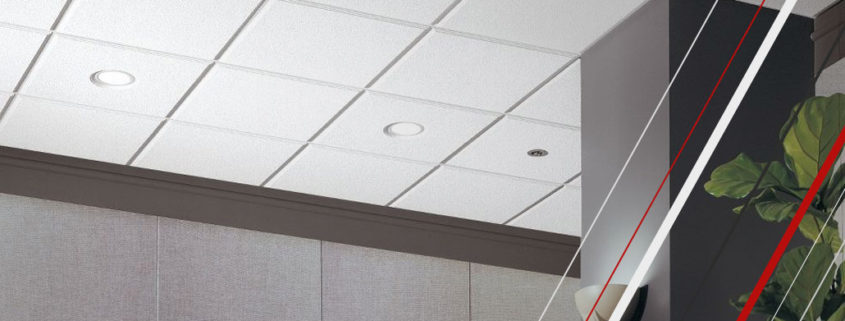
Following on from our recent social media post about using the above tiles, we are going to provide more information on the materials that we used.

The tile used on this particular office refit job for Hackwood homes were Armstrong Puretone Regular ceiling tiles in a 24mm grid system.

Armstrong provide ceilings for commercial spaces and the home and are a global leader in the design and manufacture of innovative commercial and residential ceiling, wall and suspension system solutions.

Their ceilings have acoustical properties and that means they can help control sound and noise within a room and room to room. They have ceilings that also address fire and seismic concerns too.

They offer 25 mineral ceiling solutions in grid sizes 15mm 24mm and 24/35mm with varying levels of acoustics. There are ceiling panels, canopies, vertical baffles and open cell & mesh.

They offer the broadest range of textures, sizes and shapes, with key performance features to enhance the design of any space. Mineral ceilings provide solutions for every acoustical need from high sound absorption to high sound attenuation or a balance of both.

Have a browse of their website here:

https://www.armstrongceilings.com

armstrong ceiling tiles


new homes

New home permissions hit the highest on record

According to the latest Housing Pipeline report from the Home Builders Federation, the number of  planning permissions granted in the year to June 2017 is the highest seen since 2006. 

Permission for  321,982 new homes was granted during the 12 month period, up form 278,652 the previous year. However, the data also indicated that there has been a “slight cooling” in residential development in the second quarter of the year, with the number homes approved falling 14% from the first quarter yet the figure is still up 13% on the year before.

Demand for the help to buy scheme is continuing to boost numbers. More than 200,000 people live in new build homes thanks to  help to buy.  However, with the scheme supposedly coming to an end in 2021, house builders are seeking assurances as to if it will continue past this date to determine investment decisions.

Stewart Baseley, HBF’s executive chairman, was positive about the impact of the help to buy scheme. He said that ‘the help to buy scheme hasn’t just helped 200,000 people buy a home, it has helped them to build a new home which is, in turn, boosting supply and generating huge benefits for communities, councils and the Exchequer.

‘Ultimately if people can buy, builders can build and confidence in demand is crucial to future build rates.  The figures show that if demand for new homes remains strong and the planning system processes applications efficiently, further increased in build rates can be delivered in the coming years.’

However, the planning system itself is still laborious, meaning that it could take 3-4 years for most of these to reach completion. Whilst housing supply is up 52% in the past three years there are still not enough homes to adequately cater for our population and the planning system remains one of the major constraints on supply. Speeding up the rate at which builders get onto sites, and ensuring Local Authorities abide by their responsibilities and allocate sites that meet their local housing needs are key requirements if the house building industry is to deliver much needed housing.

Baseley also stated that ‘These record planning permission figures are a clear indication that house builders are committed to increasing housing output. We’ve seen 50% growth in output over the last three years and these figures indicate that progress can continue. We need to see confirmation from government as to the future of the very successful Help to Buy scheme post 2021. We also need to see the proposals to improve the planning system outlined in the White Paper moved forward and implemented.’

FIRAS

We are FIRAS registered

As part of our ongoing expansion, and to offer as many services as possible, we have recently become FIRAS registered.  

As a requirement of the FIRAS Schemes, certificated companies are required to employ, on a permanent or contract basis, competent Supervisors and Technicians (Operators) whose technical and practical competence is assessed by FIRAS Inspectors in the trade disciplines for which certification scope is held. A register of competent employees is maintained for each certificated company, which is regularly reviewed to ensure that the company maintains a competent workforce whose abilities remain current with the workscope the company provides.

Once certificated, all FIRAS Registered Installer Companies are subject to ongoing random inspection of their installation work on ongoing contracts along with an annual audit of their office systems by FIRAS Inspectors to ensure that compliance with FIRAS Scheme Requirements is maintained.

FIRAS are a voluntary, third party certification for installation contractors of both passive and active fire protection systems, operated by Warrington Certification, and accredited by UKAS to EN45011.

FIRAS certification started in 1994 and has been instrumental in improving standards of installation of fire protection products/systems to the benefit of the construction industry and the clients it serves.

Why choose a FIRAS certificated installation contractor?

FIRAS certificated contractors are required to undergo a 3 stage assessment process. Only when the applicant contractor has satisfied all of the following criteria is certification granted:

• Assessment of office management systems.

• Assessment of workmanship of site for all trade disciplines for which certification is sought.

• Competence assessment of supervisory and installation employees.

If the job is not installed to Firas standards by the sub contractor (MGN Fire Protection), then FIRAS cannot issue certification until the works are up to the above criteria.

FIRAS certification is awarded to the contracting company not the staff. Should a contractor wish to increase their scope of certification, a separate application must be made to attain the additional certification.

All FIRAS site inspectors have technical and practical knowledge and experience in fire protection.

FIRAS certificated contractors are subject to an annual audit of their offices and ongoing, random surveillance site inspections where competence and workmanship are assessed.

FIRAS inspectors conduct additional inspections of the work carried out by the certificated contractor on request to satisfy client’s needs.

We at present can offer penetration sealing services – techniques that will minimise the effect a fire has on the fabric of a building.

This must look at dividing a building into compartments that can be closed to stop the spread of fire – this is known as compartmentation. Confining a fire to its point of origin is the key objective of any fire safety measure..

Compartments with fire-separating elements, on the other hand, can confine a fire to its area of origin so it is essential to maintain integrity where services breach fire resting walls in such areas as:-

• multi-service openings through walls and floors

• blank service openings through walls and floors

• combustible pipes (plastics)

• cavity barriers

• construction joints

• any imperfection of fit to a fire-rated building element

Proprietary penetration seal/service opening fire protection systems include boards, batts, mortars, sealants, collars, wraps, pillows, curtains and linear joints. Penetration seal systems are available for up to 4 hours integrity and, in some cases, insulation against a cellulosic fire, in accordance with national and European standards. Products are also available to protect against hydrocarbon fires.

•Source FIRAS / EAPFP

solecco solar

New Solar roof tiles to be launched

Solecco Solar are getting ready to launch their new solar roof tile solution at UK Construction Week this month, as well as their new website www.soleccosolar.com

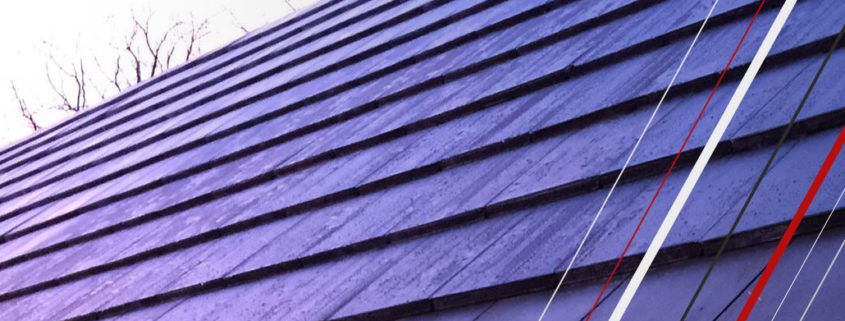
The new, innovative technology company supplies and installs unique, sustainable solar roof tiles for developers and homeowners with aesthetics and renewable energy at the top of their design agenda.

The roofing tiles attract energy even when its cloudy, reducing annual operational bills significantly. They are also an excellent architectural consideration. The tiles combine minimalistic, sleek aesthetics with outstanding performance.

The solution is integrated into roofing via a unique interlocking method, with tiles fitting seamlessly on up to 98% of roof surface area. The zero-glass system has a low carbon footprint and is an eco-asset which drives energy efficiency and protects against rising electricity costs.

As well as exhibiting and launching the brand at Construction Week UK’s Energy 2017, Solecco Solar is showcasing at London Build 2017 on 25 – 26 October. Solecco is also shortlisted for Product of the Year Award at both the London Construction Awards and National Energy Efficiency Awards 2017.

James Birch, Development Director said: “The exhibition is the ideal opportunity for us to showcase Solecco Solar Tiles to a diverse audience of industry professionals. The event connects us to potential customers who are, in the current construction climate, actively seeking an aesthetic and renewable energy solution to enhance their sustainable approach to development.”