How the Right Render System Supports Building Performance and Appearance
Rendering is often seen as the final touch on a building’s exterior. It creates a clean, finished surface and plays a major role in how a project looks once complete.
However, render does far more than improve appearance. The right system can support weather protection, durability, thermal performance, and long-term maintenance. For commercial projects, this means render should be considered as part of the wider building envelope, not just as a decorative finish.
Choosing the right system early helps contractors and developers avoid design clashes, improve coordination, and achieve a finish that performs as well as it looks.
Render Is More Than a Surface Finish
In construction, rendering refers to the application of an external coating to a wall. Depending on the system used, it can help protect the building fabric, create a consistent finish, and support the performance of the external wall build-up.
Broadsword’s rendering service includes external one coat through-colour render, EIFS, also known as external insulated finishing systems, and traditional sand and cement systems. These systems can support both residential and commercial projects, depending on the building type, substrate, and required finish.
Render also needs to work with the wider construction package. It may interact with insulation, membranes, openings, façades, fixings, and internal finishes, which is why early coordination is so important.
Appearance Still Plays an Important Role
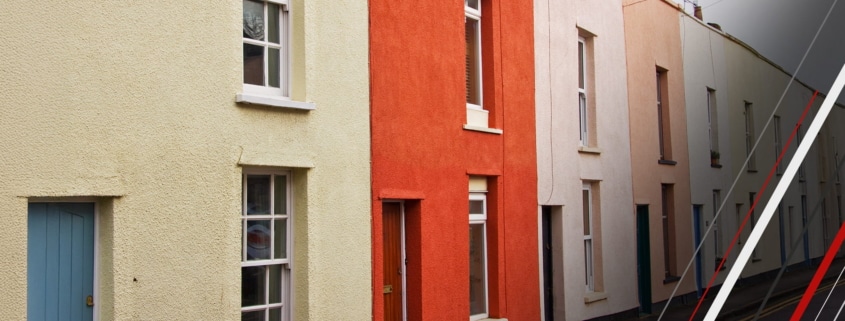
A building’s external finish has a major impact on first impressions. Render can help create a modern, clean, and consistent appearance across a façade, particularly where the project needs a smooth or unified external look.
Different render systems offer different finishes, textures, and colour options. Through-colour render, for example, can provide colour consistency throughout the material, reducing the need for separate surface painting in the same way as some traditional finishes.
For commercial projects, appearance is not just about style. A well-executed external finish contributes to the perceived quality of the whole development. This is especially important when rendering forms part of a wider package involving interior fit out, plastering, or dry lining, where the overall finish needs to feel consistent inside and out.
The Right Render System Can Support Building Performance
Some render systems can also contribute to thermal performance, particularly where external insulation is included. EIFS and external insulated finishing systems are designed to help improve the building envelope when specified and installed correctly.
This matters because the external wall build-up plays an important role in heat retention, comfort, and energy efficiency. The Building Research Establishment explains that thermal bridges occur where heat transfer is higher than in surrounding areas, often because of breaks in insulation or penetrations through the building fabric.
By coordinating render with insulation, openings, façades, and junctions, project teams can help reduce weak points in the external envelope. This supports better performance and can help avoid issues such as heat loss or condensation risk.
Weather Protection and Durability Matter
External walls are constantly exposed to rain, wind, temperature changes, and general weathering. A suitable render system helps protect the underlying structure from these conditions while maintaining the intended appearance of the building.
Durability depends on several factors, including the substrate, exposure level, detailing, workmanship, and the chosen render system. Poor specification or poor installation can lead to cracking, staining, water ingress, or premature maintenance.
The NHBC Standards provide useful wider context on why external wall detailing and workmanship matter across construction. While every project has its own requirements, the principle remains the same: external finishes need to be designed and installed with long-term performance in mind.
For commercial buildings, the best render system is one that looks good at handover and continues to perform well over time.
Render Needs to Work With Other Building Systems
Commercial construction involves many overlapping systems, and render needs to be coordinated with them properly. It may need to interface with secondary framing system installations, insulation, membranes, windows, doors, flashings, and internal linings.
If these details are not reviewed early, issues can appear later in the programme. This may affect sequencing, access, finish quality, or compliance.
Render may also sit alongside wider building safety considerations, including passive fire protection and firestopping and air sealing. Government guidance under Approved Document B covers fire safety matters within and around buildings, including external fire spread considerations.
This does not mean render should be viewed in isolation as a fire safety product. Instead, it shows why the full external wall build-up needs to be understood and coordinated as part of the wider design.
Planning Ahead Helps Avoid Programme Issues
Rendering is affected by weather, access, substrate readiness, and sequencing. If these factors are not considered early, delays can quickly affect the wider project.
Cold or wet conditions can influence external works, particularly where curing, adhesion, and surface preparation are involved. This links closely to the themes explored in Planning Ahead: How to Prepare Construction Projects for Winter and Building Through the Cold: How We Keep Construction Moving in Winter.
Early planning gives project teams time to check the system, prepare the substrate, organise access, and coordinate with other trades. This helps reduce avoidable disruption and supports a better final result.
A Better Finish Starts With Better Coordination
The best render outcomes usually come from good coordination between design, specification, installation, and wider project delivery. When the render system is selected with the full build-up in mind, it is more likely to meet expectations both visually and technically.
This broader need for early planning is also reflected in Interior Fit-Out in 2026: What Contractors Need to Plan for Early On, where coordination is shown to be essential for smoother project delivery.
A render system should not simply cover the building. It should support the way the building looks, performs, and lasts.
Conclusion
The right render system can make a meaningful difference to both building performance and appearance. It protects the external envelope, supports durability, contributes to thermal considerations, and helps create a high-quality finish.
By considering rendering early and coordinating it with the wider construction programme, project teams can reduce avoidable issues and achieve better long-term outcomes.
To learn more or discuss support for your next project, visit our Broadsword Group services page or contact us to arrange a consultation with one of our experts.