plastics

The first plastic road used in a housing development

Springfield Properties has become the UK’s first house builder to use waste plastic to build a road on a housing development.

Springfield has used the more environmentally friendly asphalt product containing waste plastic on a section of road at the company’s Linkwood Steadings development in Elgin.

The product reduces the amount of bitumen needed in the asphalt mix but the new surface looks like a traditional road while benefiting from increased durability and longevity.

Springfield teamed up with specialist MacRebur and asphalt producer Pat Munro.

MacRebur turns plastic waste that would otherwise have gone to landfill into granules which are then mixed with a special activator, reducing the amount of fossil fuel required in asphalt production.

Springfield Properties’ North Managing Director, Dave Main, said: “The road in Elgin accounts for 20 tonnes of recycled plastic, the equivalent to 17,042 plastic bags or 6,000 plastic bottles, which would otherwise have been consigned to landfill or incineration.”

Sarah Lakin, Contracts Manager for MacRebur, said: “At MacRebur, we have worked with household names in the commercial sector, the Department for Transport, Highways England and councils to use our product in everything from roads to carparks and racetracks to runways.

“We are very proud to add Springfield to our growing list of clients and welcome them onboard as the first house builder in the UK to use waste plastic in their roads and we look forward to working with them again.

“We also hope this pioneering project will inspire other developers in Scotland to follow Springfield’s lead as our product is available across the country as well as the UK and abroad.”

Source: Constructionenquirer.com

fire

Government to pay £200m for safer cladding on Grenfell Tower

The £200m bill to replace Grenfell Tower-type cladding on about 150 private high-rise blocks in England is to be met by the government.

Housing Secretary James Brokenshire had previously said the bill should be footed by the owners, not the taxpayer.

But he said owners had been trying to offload the costs on to leaseholders and that the long wait for remedial work had caused anxiety for residents.

Leaseholder groups said the news would be a “relief” but more was needed.

Seventy-two people died when a fire destroyed Grenfell Tower, in west London, in June 2017, in one of the UK’s worst modern disasters.

It took minutes for the fire to race up the exterior of the building, and spread to all four sides.

A public inquiry into the fire heard evidence to support the theory that the highly combustible material in the cladding was the primary cause of the fire’s spread.

Latest government figures show that 166 private residential buildings out of the 176 identified with aluminium composite material (ACM) cladding – the same type used on Grenfell Tower – are yet to start work on removing and replacing it.

  • Unsafe cladding still affects thousands
  • Stars in emotional Grenfell cladding video
  • The terrible speed with which the Grenfell fire spread

Mr Brokenshire admitted he had changed his mind on demanding that freeholders pay up for safety work.

He said some building owners had tried to pass on the costs to residents by threatening them with bills running to thousands of pounds.

“What has been striking to me over recent weeks is just the time it is taking and my concern over the leaseholders themselves – that anxiety, that stress, that strain, and seeing that we are getting on and making these buildings safe.”

Alex Di Giuseppe, a leaseholder in a block with unsafe cladding in Manchester, said he has been dealing with the developer, freeholder and management agent but had got nowhere.

“It’s taken its toll. We’ve been living in an unsafe building and we’ve had these huge costs placed upon our heads. The stress is insurmountable.

“If this was a car with an airbag issue, it would be recalled.”

Pemberstone, Aberdeen Asset Management, Barratt Developments, Fraser Properties, Legal & General and Mace and Peabody were named as having fully borne the costs for their buildings.

Grenfell United, a group of survivors and the bereaved, said the news offered hope to people feeling at risk at home.

“This result is a testament to residents themselves. The truth is we should never have had to fight for it,” the group said.

It asked the government to consider financial support for residents as they continue night watches and wait for the remediation work to begin.

Rachel Loudain, from the UK Cladding Action Group, said leaseholders had exhausted all other options before the government stepped in to pay for the work.

“No developer was taking responsibility, no freeholder, we didn’t have any option legally or any option with insurance,” she said.

The group welcomed the news but pointed out that “many, many” leaseholders and social housing tenants living in blocks with other forms of unsafe cladding would be excluded from this help.

“Fire does not distinguish between the different types of failed cladding out there. This inadequate response will be looked back on in shame when the next Grenfell tragedy occurs,” the group said.

Labour accused the government of being “frozen like a rabbit in the headlights” in its response to the Grenfell disaster.

“Too weak and too slow to act at every stage and on every front,” the shadow housing secretary John Healey said.

The government has already committed to funding replacement cladding in the social sector. There are currently 23 blocks still covered in it.

Owners of private buildings will have three months to claim the funds, with one condition being that they take “reasonable steps” to recover the costs from those responsible for the cladding.

Source: BBC.co.uk

Ekodek Board System

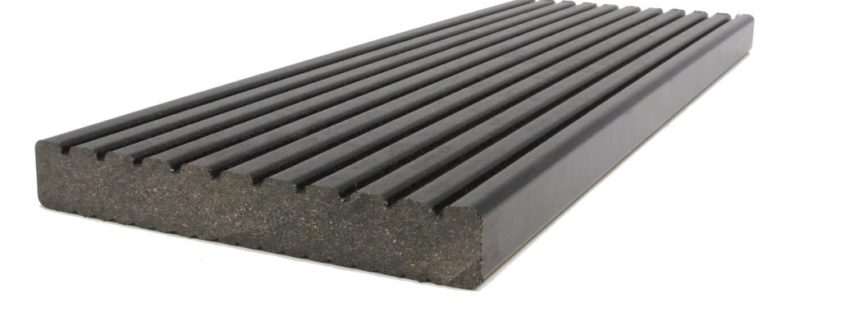
Ecodek have been producing their unique ecodek® WPC board system for over 14 years. In 2018, the production of ecodek® material consumed more than 3600 tonnes of recycled plastic milk bottles and sustainably sourced hardwood fibres.

With the versatility to adapt to urban or traditional design schemes, ecodek® will allow the designer to transform outdoor spaces and gardens into feature areas. They have produced a range of specific screws, substructure bearers and beams specifically designed for their boards.

ecodek® can be found across the UK and beyond, in residential settings and in public realm areas such as balconies, roof terraces, walkways, bridges, schools, care homes, stadia and restaurants.

Offering bespoke lengths to suit individual projects means a welcome relief on site to the usual problem of waste materials. ecodek® material is 100% recyclable, should any waste be generated on site, their buy back scheme means that this can be sent back to the factory and put back into the production of new boards.

The boards will not warp, splinter or rot, and as ecodek® does not promote mould or algae growth, only require minimal maintenance, and do not require sanding or sealing.

ecodek® material comes with a 25 year warranty as standard, giving piece of mind to both specifier and end user.

Here’s a re-cap of the benefits of ecodek® boards over traditional timber decking:

  • High quality, British made Wood Plastic Composite
  • ecodek® contains 95% recycled and sustainably raw materials and is 100% recyclable
  • Low maintenance – doesn’t require sanding or staining
  • Solid profile that is resistant to rotting, algae and fungal growth plus, no splintering, splitting or flaking­­­
  • Low potential for slip in both wet and dry (tested to HSE standards)
  • Bespoke lengths
  • Easy as timber to work with
  • Low moisture absorption
  • In-built termite and UV resistance
  • Carbon negative production
  • 25 year warranty

Source: UK Construction Week

house funding

Labour will end slum office housing

Labour says it would scrap a government scheme that allows offices and industrial buildings to be converted into homes without planning permission.

The party said changes to permitted development rules in England had led to the creation of “slum housing and rabbit hutch flats”.

It also said developers had been able to avoid building affordable homes.

The Conservatives said the plans would “cut house building and put a stop to people achieving home ownership”.

In 2013, the government changed planning rules to allow developers to turn offices, warehouses and industrial buildings into residential blocks without getting permission from the local council, in a bid to boost house building.

The rules have since been further relaxed, leading to 42,000 new dwellings being created from former offices in the last few years.

However, permitted development schemes are exempt from official space standards and also from any requirement to provide affordable homes.

Labour said the policy had seen the loss of more than 10,000 affordable homes, and meant that flats “just a few feet wide” were now counted in official statistics as new homes.

It said its policy was still to build 250,000 new homes a year in England with 100,000 being “genuinely affordable”.

“This Conservative housing free-for-all gives developers a free hand to build what they want but ignore what local communities need,” said John Healey, Labour’s shadow housing secretary.

“Labour will give local people control over the housing that gets built in their area and ensure developers build the low-cost, high-quality homes that the country needs.”

In one permitted development scheme at Newbury House in Ilford, an office block has been turned into 60 flats measuring as little as 13 sq metres each.

According to national space standards, the minimum floor area for a new one-bedroom one-person home is 37 sq metres.

Critics say the schemes can be damaging to residents’ mental wellbeing, as well as being miles from amenities and conducive to crime.

At Terminus House – a converted office block in Harlow – crime jumped 45% in the first 10 months after people moved in and by 20% within that part of the town centre.

However some developers warn that without permitted development many office to residential schemes would no longer be viable.

The government says the rules are helping tackle the housing crisis and allowing people to get on the housing ladder.

Of the 13,526 homes delivered under permitted development last year, more than three quarters were built outside of London

Marcus Jones, Conservative vice-chair for Local Government, said: “Labour’s plans would cut house building and put a stop to people achieving homeownership.

“We are backing permitted development rights, which are converting dormant offices into places families can call home.

“Whilst Labour put politics before our families, the Conservatives are delivering the houses this country needs so every family has a place to call home.”

Source: BBC.co.uk