Brexit – what does it mean for the construction industry?

The latest figures from the Royal Institution of Chartered Surveyors (RICS) show that eight per cent of the UK’s construction workers are EU nationals, accounting for some 176,500 people. Post Brexit, if the UK looses access to the single market, 176,500 jobs could be under threat which could jeopardise a predicted £500 billion infrastructure pipeline to a standstill. This must be addressed as a priority, according to RICS.

Jeremy Blackburn, head of UK Policy at RICS says that “as the industry’s professional body, we are working with government and industry to develop that skills base, building vital initiatives – such as degree apprenticeships – in our sector to drive the talent pipeline forward.”

The UK is already in the grip of a construction skills crisis. While some overseas professionals are regarded as critical by the UK Government, and are therefore prioritised during the visa application process, construction professions have not yet been added to the ‘UK Shortage Occupations List’. According to Blackburn, quantity surveyors should be included on that list. Some of the professions that are on the list won’t improve our infrastructure or solve the housing crisis, yet their skills are currently viewed as essential, whereas construction professionals are not.

RICS has cautioned that for Brexit to succeed, it is essential to secure continued access to the EU Single Market or to put alternative plans in place to safeguard the future of the property and construction sectors in the UK. Blackburn states that unless access to the single market is secured or alternative plans are put in place, we won’t be able to create the infrastructure needed to enable our cities to compete on a global stage. We have said before that this is a potential stumbling block for the Government, which is working to deliver both its Housing White Paper and Industrial Strategy. Of course, we must also address the need to deliver a construction and property industry that is resilient to future change and can withstand the impact of any future political or economic shocks — key to that will be growing the domestic skills base. As the industry’s professional body, we are working with Government and industry to develop that skills base, building vital initiatives, such as degree apprenticeships, in our sector to drive the talent pipeline forward. This survey reveals that more work needs to be done to promote the indisputable benefits of these schemes to industry — RICS intends to take this forward as a priority.

With Theresa May having officially triggered Article 50 on March 29th, Britain should officially leave the EU no later than April 2019. Last month, planning consultancy Arcadis said that the UK must hire more than 400,000 workers every year for the next five years to meet demand for house building and infrastructure projects, without the threat of foreign workers departing as a result of Brexit.

No member state has ever withdrawn from the EU, so these projections are just that at this stage. Whatever the future holds for construction, Broadsword will continue to use innovative and new approaches to deliver high quality work in all aspects of our business.

Broadsword and the local community

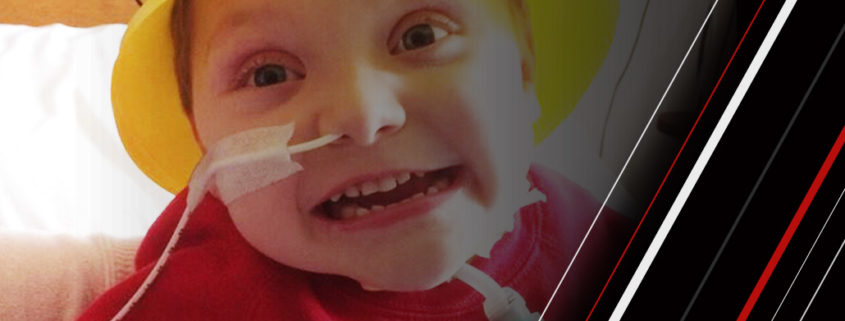
Archie Adams (3 years old), from Southampton, was diagnosed with transverse myelitis after a trip to the park. He was left unable to move from the neck down, as the rare condition causes spinal damage which requires months of rehabilitation. Two years of treatment followed at Southampton General Hospital and the Children’s Trust Hospital in Tamworth, Surrey.

His parents, Karen and Russell have worked tirelessly to raise money to adapt their home for Archie, and in February their dream came true when Archie was finally able to leave hospital and live with his family again. Volunteers raised thousands of pounds to install life changing facilities for Archie. The flat where the family lived prior to his illness was not suitable for his needs and they had nowhere else to go, so Russells mum donated them her house in Lordswood.

For five months local businesses and volunteers worked to revamp the ground floor of the building to create a bedroom and bathroom for Archie and install 3 hoists which will allow him to move around more easily. Hopefully this will mean that Archie can be as independent as he can.

The project was possible thanks to a donation from Southampton City Council, fundraising activities and the work of local people and businesses, who donated materials and hours of work for free.

Broadsword are proud to have been part of the team that helped Archie, and look forward to watching him make improvements and follow his progress as he goes to school and adapts to his new surroundings.

To help Archie you can donate via here

To follow Archie on Facebook please go here

FIRAS

Broadsword to become FIRAS accredited

We are always looking at ways in which we can improve our services and offer more. At the moment we are concentrating on achieving our FIRAS accedition.

FIRAS is a third party certification scheme that verifies the competence of a contractor company to design fire protection systems. As a participant in the scheme the company has to employ appropriately skilled design, supervision and operational staff who have been assessed. FIRAS companies may issue a FIRAS endorsed certificate conformity verifying completion of works where upon an installation certificate may be issued.

Many customers know little about how fire threatens their staff or business or what their legal obligations are. Once Broadsword become certificated we can prove our competence and therefore differentiate from the competition. This means that we can generate new customers and business to companies who see fire risk as an important element of their construction.

FIRAS certified contractors are required to undergo a 3 stage assessment process. Once all the criteria are satisfied certification will be granted. The 3 stages are as follows:

Assessment of office management systems
Assessment of workmanship of the site for all trade disciplines for which certification is sought.
Competence assessment of supervisory and installation employees.

We are in the process of following these criteria so that we can become certified as soon as possible. We will keep you updated on our progress!

H&S Vacancy2

VACANCY: Health & Safety Co-ordinator

Due to the continued expansion of the Broadsword Group we have an exciting opportunity within the business for a permanent, full time Health & Safety Co-Ordinator to work with our current team maintaining and developing our existing systems.

The ideal candidate will be expected to;

  • Assist all departments to undertake detailed RAM’s & implement solutions on any specific issues identified
  • Carry out accident investigations with the assistance of the Management Team
  • Provide information & advice on Health & Safety to all levels
  • Review and implement staff and subcontractor training
  • Carry out site Health and Safety audits throughout the Company
  • Maintain accurate records of assessments & actions
  • Co-ordinate with Broadsword Senior Management and Directors implementing Company directives
  • Co-ordinate and monitor the consistency of site level toolbox talks
  • Complete H&S questionnaires, attend seminars and site H&S meetings
  • Work with clients to ensure continued development, pre-empt industry trends and implement change
  • Work with the current management team to develop existing systems to achieve ISO & SSIP accreditations.

Preferably, the candidate should have industry experience and a formal qualification (NEBOSH or IOSH) or a desire to develop a career with formal training.

Salary package is negotiable and commensurate with qualifications and experience.

Please issue CV and covering letter to hello@broadsword-group.co.uk or contact our head office on 02380 675888 if you require any further dialogue.

Broadsword looking to offer innovative new screedboard floor solution

Broadsword are always trying to find new innovative ways to aid our construction and ensure our clients our offered services which mitigate rising costs whilst increasing productivity. Screedboard is another one of these. Predominently produced to assist the logistical difficulties associated with pumping wet screed to high-rise buildings within tight city centres. The practical installation and adaptable nature of screed board installed within through the floor solutions means that many different projects should consider screed board as an alternative to wet screeds.

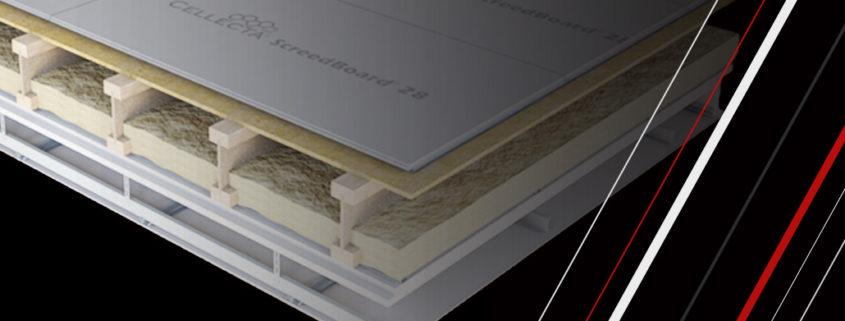
Screedboard (A trademark of Cellecta LTD) is an award winning dry screed floorboard designed for acoustic soundproofing and under floor heating applications. It is an interlocking reinforced, high density calcium sulphate (gypsum) board. It is used in place of a free flowing or concrete screed and once laid, looks and feels like a traditional concrete screed. It can also be combined with a resilient layer (ScreedBoard 28) and be used to reduce the transmission of airborne and impact sound through separating floors.

It is ideal for a multitude of floor constructions because of its high density, high impact resistance and hard wearing surface.

There are many benefits to using Screedboard:
  • Excellent soundproofing
  • Efficient underfloor heating
  • No screws required
  • Seamless dry screed finish
  • 100% recycled material
  • Hard wearing surface
  • Accepts ceramic tiles
  • Interlocking edges
  • Easy to cut to size and install

Screedboard 20 is the ultimate for underfloor heating and sound reduction. This dry screed board has the lowest thermal resistance allowing ground water heat pumps and heat recovery to be at their most efficient. ScreedBoard 28 is a composite interlocking dry 20mm screed board, with an 8mm high performance resilient layer. It is the ultimate single layer acoustic overlay treatment, featuring interlocking edges for installation convenience. It is only 28mm thick and is suitable for all types of timber and concrete floor.

Dry screed floors are rapidly being recognised as the ideal solution for new build and refurbishment floors. Supplied in planks, ScreedBoard’s offer a modern, time saving solution that significantly speeds up build times compared to wet screeding methods.

On ground floors dry screed boards can help optimise underfloor heating conditions. On upper floors they can be used for high performance sound proofing (when combined with a resilient layer), or as a combined underfloor heating and sound proofing solution.

Installing a dry screedboard flooring system removes the drying times typically associated with wet screed acoustic flooring systems, screedboard floors are able to accept foot traffic as soon they are installed, allowing workers to install ceramic tiles, carpets and vinyl flooring immediately. Dry screed board sheets can be stored on site until they are required for installation.

Please contact us for more information or to discuss how screedboards could benefit you.